

Table of Contents
If you’re reading this, chances are you’re standing at one of midlife’s most confusing crossroads: should I take HRT menopause? The question can feel like a heavy weight. You’re juggling hot flashes that wake you up drenched, brain fog that leaves you scrambling for words, and mood swings that make you wonder if you’re losing yourself. On top of that, the buzz about hormone replacement therapy (HRT) swings wildly between “dangerous” and “miraculous.”
You’re not alone. Many women aged 48 to 58 find themselves overwhelmed, frustrated, and desperate for clear, science-backed answers. What’s the truth about HRT? Is it safe? Will it actually help? How do you decide?
This guide is designed to walk you through those questions with warmth, empathy, and deep expertise. We’ll explore the complex science behind menopause, hormone replacement therapy, and the risks and benefits — all explained in simple, relatable language. By the end, you’ll have the tools and confidence to make a decision that truly fits your life and health.
If you’re ready to go even deeper, our 90-Day Transformational Course is designed specifically for women navigating this transition — but for now, let’s start with the essentials. If you’re ready, let’s get started.
Understanding the Symptoms of Menopause: What’s Really Happening?
Try Our New Tool
What Are the Symptoms of Menopause?
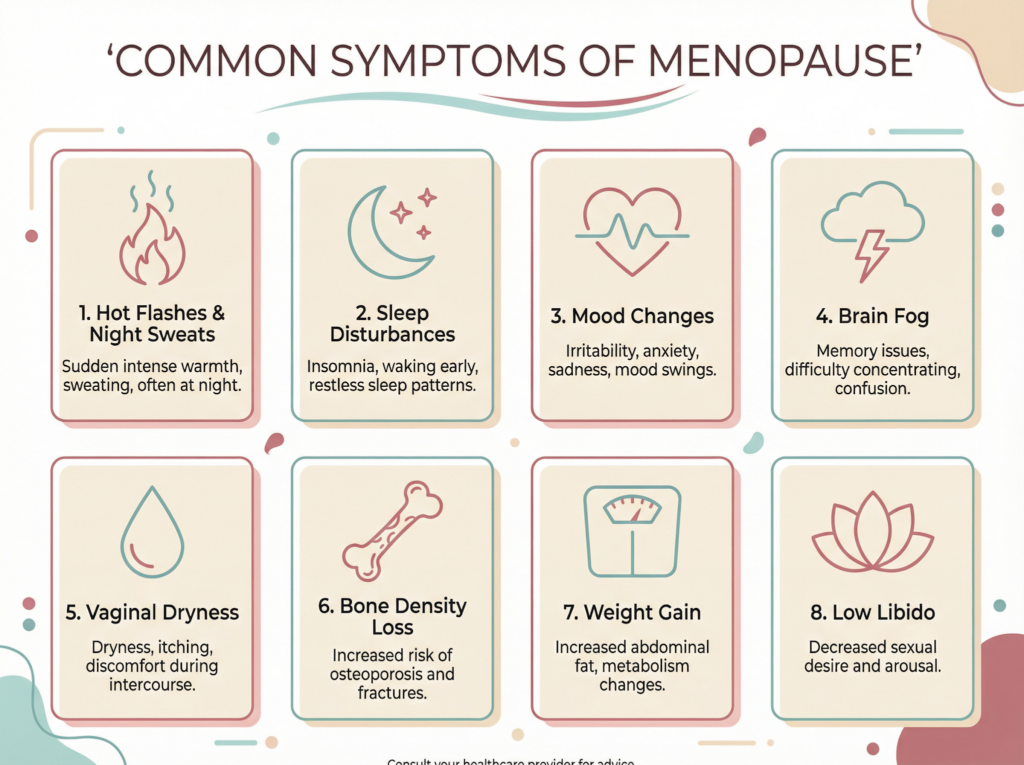
The symptoms of menopause are far more varied than most women expect. While hot flashes and night sweats are the most widely recognised, the hormonal changes of this transition can touch virtually every system in your body.
- Hot flashes and night sweats: Sudden feelings of intense heat, flushing, and sweating that can disrupt sleep and daily activities.
- Mood changes: Irritability, anxiety, and depression can become more frequent or intense, sometimes appearing out of nowhere.
- Sleep disturbances: Difficulty falling or staying asleep, often linked to night sweats but sometimes independent of them.
- Cognitive fog: Trouble concentrating, forgetfulness, and slower mental processing — often described as ‘losing your words.’
- Vaginal dryness and discomfort: Loss of estrogen thins vaginal tissue, causing discomfort during intimacy and everyday life.
- Decreased libido: Hormonal changes can reduce sexual desire, sometimes significantly.
- Bone density loss: Estrogen plays a key role in maintaining bone health; its decline increases fracture risk over time.
- Weight gain and metabolic shifts: Fat distribution changes, often accumulating around the abdomen even when diet and exercise haven’t changed.
Menopause symptoms don’t all hit at once or affect every woman the same way. Some breeze through with minimal disruption; others feel their quality of life plummet. The range of experience is enormous, which is exactly why treatment needs to be personalised.
Why Do These Symptoms Happen?
During perimenopause and menopause, your ovaries gradually produce less estrogen and progesterone. These hormones aren’t just about reproduction — they influence your brain, heart, bones, skin, and more. When they drop, your body reacts in all sorts of ways.
For example, estrogen helps regulate your body’s temperature control system in the brain. When it dips, the hypothalamus — the body’s thermostat — gets confused, triggering hot flashes. Similarly, estrogen supports serotonin production, which affects mood and sleep. Understanding this helps make sense of why hormone replacement therapy can be so effective — it’s about restoring balance in these critical systems.
When Should You Start Thinking About Treatment?
If your symptoms interfere with daily life — waking you up multiple times a night, causing anxiety or depression, or making intimacy painful — it’s time to explore solutions. You don’t have to suffer in silence or assume this is just ‘part of getting older.’ Effective treatments exist, and you deserve to know about them.
Takeaway: Knowing the symptoms and their root causes empowers you to make informed choices. The wide range of menopausal experiences means your treatment should be just as personalised.
Hormone Replacement Therapy HRT: What It Is and How It Works








Now that you’re clear on the symptoms of menopause, let’s talk about hormone replacement therapy HRT itself. What exactly is it, how does it work, and what forms does it take? Understanding your options is essential to answering the question: should I take HRT menopause?
What Is Hormone Replacement Therapy?
HRT involves supplementing your body with estrogen, sometimes combined with progesterone, to make up for the hormones your ovaries are no longer producing at the same levels. The goal isn’t to make you ‘young’ again — it’s to ease symptoms and reduce the health risks linked to hormone loss. Think of it as topping up a tank that’s running low, just enough to keep the engine running smoothly.
There are two main types of hormone replacement therapy HRT:
- Estrogen-only therapy: For women who’ve had a hysterectomy (no uterus). This is the simplest form of HRT.
- Combined therapy: Estrogen plus progesterone or progestin, for women with an intact uterus. Progesterone protects the uterus lining from overgrowth, reducing endometrial cancer risk.
Delivery Methods: More Than Just Pills
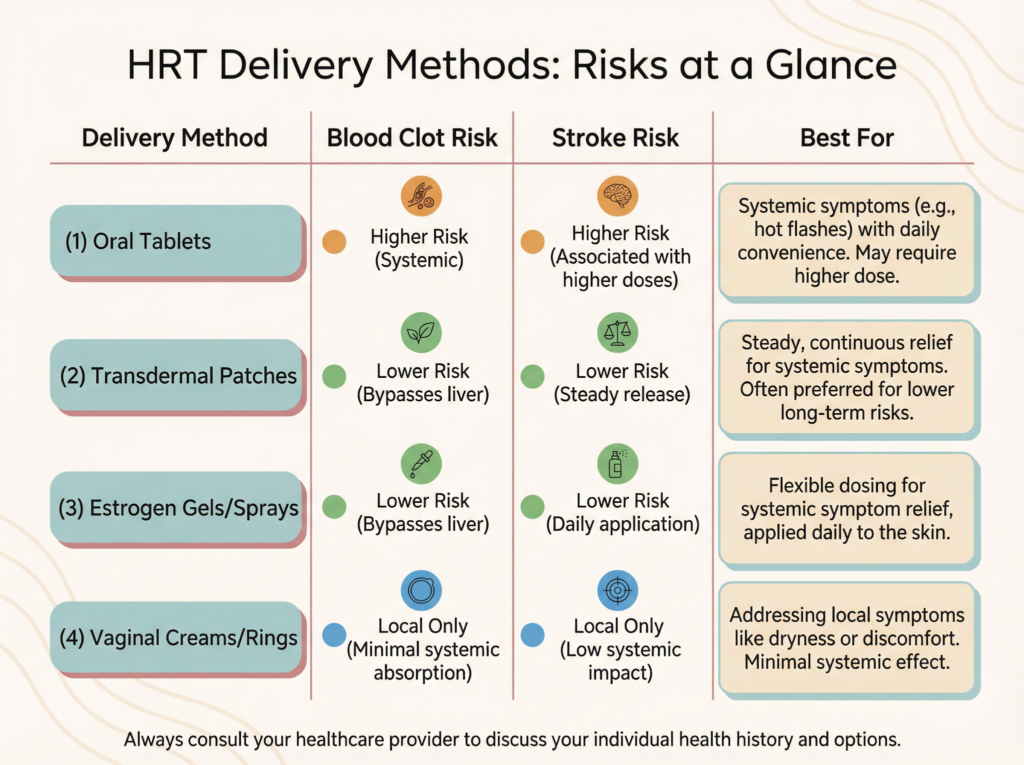
You don’t have to take HRT in pill form if that doesn’t feel right for you. The delivery method actually matters a great deal — not just for convenience, but for safety. Options include:
- Oral tablets: The most common form but with a slightly higher risk of blood clots due to their effect on liver proteins.
- Transdermal patches or gels: Applied to the skin, these deliver estrogen directly into the bloodstream, bypassing the liver and significantly lowering risks of clotting and stroke [1].
- Vaginal creams or rings: Target local symptoms like dryness and discomfort without systemic effects — a great option if your main concern is vaginal health.
Choosing the right method depends on your health history, lifestyle, and personal preferences. This is a conversation worth having in depth with your healthcare provider.
How Does HRT Help?
HRT can be genuinely transformative for menopausal symptoms. Here’s what the evidence shows:
- Hot flashes and night sweats: HRT is the most effective treatment available, reducing frequency and severity dramatically — often by 70–90% [7].
- Sleep quality: By easing night sweats, it helps you get the restful sleep your body needs to function well.
- Mood and brain health: Estrogen supports neurotransmitters that regulate mood and cognition, easing anxiety, depression, and brain fog [2].
- Bone health: HRT slows bone loss, reducing fracture risk — a significant concern for postmenopausal women.
- Vaginal and urinary health: Estrogen restores tissue thickness and lubrication, improving comfort and reducing recurrent urinary tract infections.
Who Should Consider HRT?
If your symptoms are moderate to severe and are impacting your quality of life, HRT is worth a serious conversation with your doctor. It’s especially beneficial when started during what researchers call the ‘Window of Opportunity’ — within 10 years of your last period or before age 60. This timing maximises benefits and minimises risks [3].
Takeaway: Hormone replacement therapy HRT isn’t a one-size-fits-all solution. Its effectiveness and safety depend on timing, type, and method of delivery. Working closely with your healthcare provider to tailor the right approach is key.
Weighing the Risks of Hormone Replacement Therapy: What You Need to Know
When you ask ‘should I take HRT menopause?’ one of the biggest concerns swirling in your mind is almost certainly safety. The risks of hormone replacement therapy have been debated for decades, and the confusion can feel paralysing. Let’s cut through the noise with clarity and compassion.
The History That Shaped Fear
You might remember the 2002 Women’s Health Initiative (WHI) study that linked HRT to increased risks of breast cancer, stroke, and heart disease. The headlines scared many women off HRT for years — and understandably so. But context is everything.
The WHI studied women who were, on average, well past menopause — often in their 60s or older — and who started HRT years after hormone decline had already begun. Starting HRT late, after a long gap, is associated with higher risks. Newer research shows that starting HRT within the Window of Opportunity (before age 60 or within 10 years of menopause) has a much safer profile and may even protect heart health [4], [5]. The fear was real, but it was based on a study that didn’t reflect most women’s situations.
What Are the Actual Risks of Hormone Replacement Therapy?
The risks of hormone replacement therapy are real, but they’re also nuanced and highly dependent on individual factors. Here’s what the current evidence shows:
- Blood clots: Oral estrogen increases the risk, especially in smokers or women over 60. Transdermal estrogen (patches or gels) carries a much lower risk because it bypasses the liver [1].
- Breast cancer: Combined estrogen-progestin therapy slightly raises risk after 3–5 years of use, but estrogen-only therapy doesn’t show the same increase and may slightly reduce risk if started early [6].
- Stroke and heart disease: Risks are minimal when HRT is started early but can increase if started late after menopause.
- Gallbladder disease: Oral estrogen can increase risk; transdermal forms are safer in this regard too.
- Other side effects: Some women experience breast tenderness, bloating, or mood changes in the early weeks, which often settle with dose adjustment.
Individual Risk Factors Matter
Your personal health history profoundly influences how risky HRT is for you specifically. A history of breast cancer or blood clots usually means HRT isn’t recommended. Family history of heart disease, smoking, obesity, and high blood pressure all increase risks. The type of estrogen and progesterone you use, the dose, and the delivery method all affect your safety profile. This is precisely why a thorough evaluation with your healthcare provider is non-negotiable.
Balancing Risks and Benefits
The key insight is that risks aren’t the same for every woman. For many, the benefits of symptom relief, improved quality of life, and protection against osteoporosis outweigh the relatively small risks — especially when HRT is started early and tailored carefully to the individual.
Takeaway: The risks of hormone replacement therapy are real but often overstated due to outdated or misinterpreted studies. Modern, personalised approaches and safer delivery methods significantly reduce those risks for most women.
Benefits and Risks of Hormone Therapy: A Deep Dive to Help You Decide

Let’s take a more detailed look at the benefits and risks of hormone therapy, so you feel fully equipped to answer your own question: should I take HRT menopause? The evidence is more reassuring than many women realise.
The Benefits You Can Expect
- Rapid Relief of Hot Flashes and Night Sweats: No other treatment comes close to HRT’s effectiveness here. Hot flashes can reduce by up to 90% within weeks of starting treatment [7]. For women whose sleep and daily life are being derailed by vasomotor symptoms, this alone can be life-changing.
- Improved Sleep Quality: Better sleep means less fatigue, sharper thinking, and improved mood. The ripple effect on overall health is profound.
- Mood Stabilisation and Brain Support: Estrogen influences serotonin and dopamine pathways, which regulate mood and cognition. Studies show HRT started early can improve memory and reduce depression risk [2], [8].
- Stronger Bones: HRT slows bone loss and can reduce fracture risk significantly [9]. This is a major long-term benefit, particularly for women with a family history of osteoporosis.
- Healthier Vaginal Tissue: HRT restores elasticity, moisture, and lubrication, reducing urinary tract infections and making intimacy comfortable again.
- Potential Heart Protection: When started early, estrogen may improve cholesterol profiles and reduce heart disease risk [5]. This is one of the most compelling arguments for the Window of Opportunity.
The Risks You Need to Consider
- Breast Cancer: There is a slight increase in risk with combined therapy after 3+ years of use, but this risk declines after stopping HRT. Estrogen-only therapy does not increase breast cancer risk and may slightly reduce it [6].
- Blood Clots: Oral estrogen increases risk; transdermal estrogen does not. Choosing the right delivery method largely mitigates this concern [1].
- Stroke: Slightly elevated risk with oral estrogen in older women, but minimal if HRT is started early in the menopausal transition [4].
- Other Side Effects: Breast tenderness, spotting, bloating, and mood changes are common in the early weeks but are often manageable with dose adjustment.
How to Navigate This Balance
Navigating the benefits and risks of hormone therapy requires a personalised approach. Here are the key principles:
- Know your health history: Talk openly with your doctor about your personal and family health risks before starting HRT.
- Choose the right type and delivery: Transdermal estrogen is safer for clot risk; micronised progesterone (body-identical) may be safer than synthetic progestins for breast cancer risk.
- Start early: The Window of Opportunity is your best chance for benefits with minimal risks [3].
- Regular monitoring: Annual check-ins allow your doctor to catch any issues early and adjust your regimen as needed.
Real-Life Story: Sarah’s Journey
Sarah, 52, struggled with night sweats and brain fog so severe she couldn’t focus at work. She was terrified of HRT because of her mother’s cancer history. After a detailed consultation, Sarah chose transdermal estrogen with micronised progesterone. Within two months, her hot flashes were nearly gone and her energy was back. She feels empowered, not scared, because her treatment was tailored to her unique needs and health history.
Takeaway: The benefits and risks of hormone therapy aren’t black and white. With the right approach, HRT can be a powerful tool to reclaim your health and vitality.
How to Decide: Should I Take HRT Menopause?
By now, you’ve gathered a great deal of information about hormone replacement therapy HRT. The question ‘should I take HRT menopause?’ doesn’t have a single right answer — it’s deeply personal and depends on your symptoms, health history, and life goals. Here’s a practical framework to guide your decision.
Step 1: Assess Your Symptoms and Quality of Life
Are hot flashes, night sweats, mood swings, or brain fog interfering with your daily life, your relationships, or your work? If yes, HRT may be the most effective treatment available to you. The severity and impact of your symptoms are the most important starting point.
Step 2: Review Your Medical History
Discuss with your healthcare provider your personal and family history of breast cancer, blood clots, stroke, or heart disease, as well as your smoking status, bone density concerns, and any other medications or health conditions. This conversation shapes everything that follows.
Step 3: Understand the Window of Opportunity
Starting HRT within 10 years of menopause or before age 60 is both safer and more effective [3]. If you fall into this window, the protective effects on your heart and bones are strongest, and the risks are at their lowest. Starting later may carry higher risks and deliver less benefit.
Step 4: Choose the Right Delivery Method
If you decide to proceed, discuss transdermal options (patches, gels, sprays) with your doctor. These methods bypass the liver, significantly lowering the risks of blood clots and stroke compared to oral tablets. If you have a uterus, you’ll also need progesterone — ask about micronised (body-identical) progesterone, which may carry a lower breast cancer risk than synthetic progestins.
Step 5: Commit to Regular Monitoring
HRT isn’t a ‘set it and forget it’ treatment. You’ll need regular check-ins with your healthcare provider to adjust dosages, monitor your health, and ensure the benefits continue to outweigh any risks. Most guidelines recommend reviewing HRT at least annually.
When NOT to Take HRT
HRT is not appropriate for all women. Those with a history of breast or uterine cancer, active or recent blood clots, unexplained vaginal bleeding, or liver disease should avoid HRT or discuss carefully tailored alternative treatments with their doctor.
Alternatives to HRT
If HRT isn’t right for you, there are meaningful alternatives. Lifestyle changes like intermittent fasting — as outlined in Intermittent Fasting for Women Over 50 Made Simple [10] — can improve metabolic health and ease some symptoms. Non-hormonal medications, cognitive-behavioural therapy for sleep and mood, and mind-body practices like yoga and meditation can all play a role in a comprehensive menopause management plan.
Conclusion: Empower Your Menopause Journey with Knowledge and Confidence
Menopause marks a profound transition, but it doesn’t have to be a time of suffering or fear. If you’ve been asking yourself ‘should I take HRT menopause?’ — now you have a clearer picture of the science, the benefits, the risks, and how to personalise your decision. You’re not navigating this alone.
Remember the Window of Opportunity — starting HRT within 10 years of menopause or before age 60 maximises benefits and minimises risks. Hormone replacement therapy HRT isn’t one-size-fits-all, but for many women, it’s the most effective tool available for reclaiming quality of life. Transdermal delivery options make it safer than ever, and the old fears from the WHI study simply don’t apply to most women starting HRT early.
You don’t have to endure severe symptoms. You don’t have to white-knuckle your way through this transition. Effective, evidence-based relief is within reach.
If you want to take the next step toward reclaiming your vitality, consider joining our 90-Day Transformational Course, designed specifically for women like you. It blends the latest science with practical lifestyle strategies and the support of a community that truly understands what you’re going through.
Or, get started right now with our FREE 5-Day Menopause Brain Reset Course to sharpen your mind and boost your energy. Your journey is unique, and you deserve care that honours that. This is your time to thrive.
Want to Learn More? Trusted Sources on HRT and Menopause
- Benefits and Risks of Hormone Replacement Therapy (HRT) — NHS
https://www.nhs.uk/medicines/hormone-replacement-therapy-hrt/benefits-and-risks-of-hormone-replacement-therapy-hrt/ - Menopause: Identification and Management — NICE Guideline (Updated 2024 )
https://www.nice.org.uk/guidance/ng23 - Hormone Therapy: Is It Right for You? — Mayo Clinic
https://www.mayoclinic.org/diseases-conditions/menopause/in-depth/hormone-therapy/art-20046372 - The 2022 Hormone Therapy Position Statement — The Menopause Society (NAMS )
https://menopause.org/professional-resources/position-statements - Menopausal Hormone Therapy and Long-Term All-Cause and Cause-Specific Mortality — JAMA
https://jamanetwork.com/journals/jama/fullarticle/2653735
Frequently Asked Questions (FAQ)
Is it better to go through menopause with or without HRT?
Consult a healthcare professional for personalized advice on HRT and menopause.
At what age is it too late for HRT?
There is no specific age at which it is too late for hormone replacement therapy (HRT); it varies based on individual health factors and goals. Consulting with a healthcare provider is essential to determine the appropriateness of HRT at any age.
What is the downside of HRT for menopause?
Potential downsides of hormone replacement therapy (HRT) for menopause include an increased risk of blood clots, stroke, heart disease, breast cancer, and gallbladder disease. Some women may also experience side effects such as bloating, breast tenderness, mood changes, and headaches.
References
Hormone Therapy and Venous Thromboembolism Among Postmenopausal Women: The ESTHER Study
Estrogen and Cognitive Functioning in Women
The Timing Hypothesis for Coronary Heart Disease Prevention with Hormone Therapy
Hormone Therapy for Preventing Cardiovascular Disease in Post-Menopausal Women — Cochrane Review
The Women’s Health Initiative Trials of Menopausal Hormone Therapy: Lessons Learned
Treatment for Osteoporosis — Bone Health and Osteoporosis Foundation