

Table of Contents
You’re Not “Losing It”—Your Brain Is Navigating a Hormonal Hurricane
If you’ve walked into a room and completely forgotten why you’re there, or you’ve searched for your phone while you’re talking on it, I want you to know something: you’re not losing your mind. You’re experiencing menopause brain fog, and it’s one of the most common—and most frightening—symptoms of this transition.
I hear from women every single day who are terrified they’re developing early-onset dementia. They tell me they can’t remember names, they lose their train of thought mid-sentence, and they feel like they’re operating in a mental haze. One woman recently told me, “I used to be sharp as a tack. Now I feel like I’m thinking through molasses.”
Here’s what I need you to understand: what you’re experiencing is real, it’s temporary, and it’s fixable. Your brain isn’t broken. It’s adapting to a massive hormonal shift, and with the right strategies, you can reclaim your mental clarity.
The Neuroscience of Menopause: What’s Happening Inside Your Brain
Let’s talk about what’s actually happening in your brain during menopause. Understanding the science helps take away some of the fear—and it shows you exactly why certain strategies work.
How Estrogen Acts as a Neuroprotector
Estrogen isn’t just a reproductive hormone. It’s one of your brain’s most powerful protectors. Research shows that estrogen facilitates higher cognitive functions by affecting brain regions like the prefrontal cortex and hippocampus—the areas responsible for memory, decision-making, and executive function [1].
Think of estrogen as your brain’s maintenance crew. It promotes the growth of new neural connections (called synaptogenesis), supports the health of existing neurons, and even helps protect brain cells from damage [2]. When estrogen levels drop during menopause, your brain temporarily loses some of this protective support.
The Impact of Declining Estrogen on Neurotransmitters
Here’s where it gets really interesting. Estrogen doesn’t work alone—it’s intimately connected to your brain’s neurotransmitter systems. Estrogen supports the production and function of serotonin (your mood stabilizer), dopamine (your motivation molecule), and acetylcholine (critical for memory and learning) [3].
When estrogen declines, these neurotransmitter systems can become temporarily disrupted. This is why menopause brain fog often comes packaged with mood changes, motivation issues, and memory problems. It’s all connected.
Brain Fog, Memory, and Cognitive Function Explained
What exactly is menopause brain fog? It’s not a medical diagnosis—it’s a constellation of cognitive symptoms that women experience during the menopausal transition. These include difficulty concentrating, memory lapses, slower processing speed, and trouble finding words [4].
Studies show that women in perimenopause and early menopause often experience subtle changes in verbal memory and processing speed. But here’s the crucial part: these changes are temporary. Research demonstrates that cognitive function often stabilizes and even improves in the years following menopause [5].
Why Menopause Mood Swings Happen (It’s Not “Just Emotions”)
Let’s address menopause mood swings while we’re talking about brain chemistry. Those sudden tears, irritability, or anxiety attacks? They’re not “just emotions” or signs that you’re “being dramatic.” They’re neurochemical events.
When estrogen drops, it affects your brain’s production of GABA (your calming neurotransmitter) and serotonin. This creates a perfect storm for mood instability [6]. Your brain is literally experiencing a chemical imbalance—and understanding this can help you approach it with compassion rather than self-judgment.
Is Brain Fog Permanent in Menopause? Understanding the Difference
This is the question that keeps women up at night: “Is brain fog permanent in menopause? Am I going to feel this way forever?”
Menopause-Related Cognitive Changes vs. Cognitive Decline
Let me be crystal clear: menopause-related brain fog is not the same as cognitive decline or dementia. They’re completely different processes with different causes and different trajectories.
Menopause brain fog is temporary, fluctuating, and tied to hormonal changes. It typically improves as your brain adapts to your new hormonal baseline [7]. Cognitive decline, on the other hand, is progressive, worsening over time, and involves structural changes in the brain.
Research shows that the cognitive changes during menopause don’t predict future dementia risk [8]. In fact, many women report that their thinking becomes clearer once they’re through the transition and implement brain-healthy strategies.
When to Be Concerned vs. When It’s Normal Menopause
That said, it’s important to know when to seek medical evaluation. Normal menopause brain fog involves occasional forgetfulness, word-finding difficulties, and concentration issues that don’t significantly interfere with daily functioning.
You should talk to your doctor if you’re experiencing progressive memory loss, getting lost in familiar places, significant personality changes, or cognitive symptoms that interfere with your ability to work or manage daily tasks. These could indicate something beyond normal menopause changes and deserve professional evaluation.
The Triple Threat: Sleep, Stress, and Blood Sugar
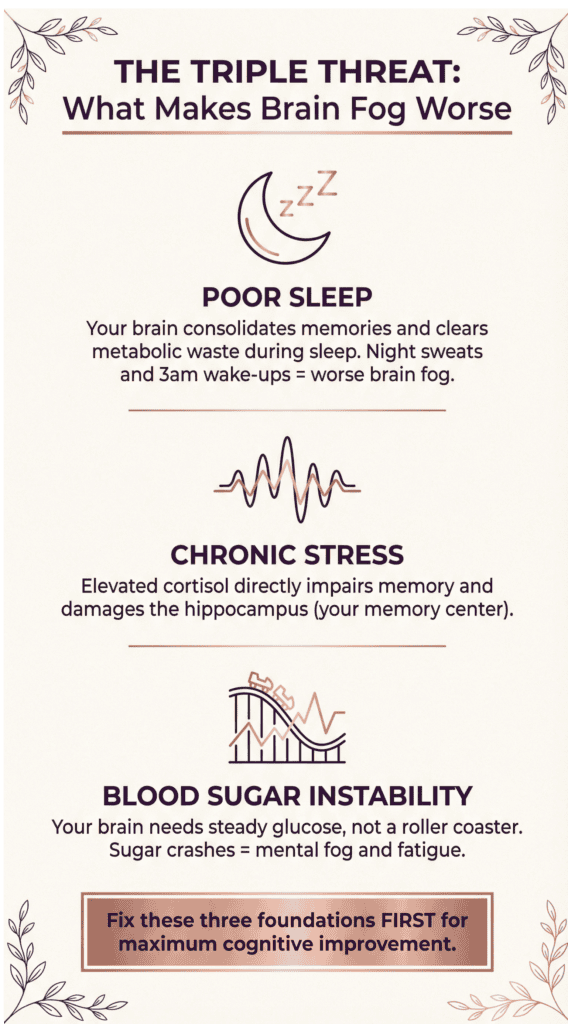
Before we dive into specific strategies to improve memory during menopause, we need to address three foundational factors that dramatically impact brain fog: sleep, stress, and blood sugar. I call these the “triple threat” because they compound cognitive issues.
How Poor Sleep Compounds Cognitive Issues
If you’re not sleeping well, your brain fog will be worse—period. Sleep is when your brain consolidates memories, clears out metabolic waste, and repairs neural connections [9]. When menopause disrupts your sleep (hello, night sweats and 3 a.m. wake-ups), it directly impacts your cognitive function the next day.
Studies show that even one night of poor sleep can impair memory, attention, and decision-making. Chronic sleep deprivation? That’s like trying to run your brain on a dying battery.
Stress and Cortisol’s Impact on Brain Function
Chronic stress and elevated cortisol levels are cognitive kryptonite. Cortisol, your stress hormone, directly affects the hippocampus—your brain’s memory center [10]. High cortisol can actually shrink the hippocampus over time and interfere with the formation of new memories.
During menopause, many women are juggling aging parents, teenagers or young adults, career demands, and their own health challenges. This chronic stress creates a cortisol cascade that makes brain fog significantly worse.
Blood Sugar Instability and Brain Fog Connection
Your brain runs on glucose, but it needs a steady supply—not a roller coaster. When your blood sugar spikes and crashes throughout the day, your brain experiences energy fluctuations that manifest as brain fog, difficulty concentrating, and mental fatigue [11].
Insulin resistance, which becomes more common during menopause, makes this worse. When your cells become less responsive to insulin, your brain doesn’t get the steady glucose supply it needs for optimal function.
Food as Brain Medicine: Foods That Help Brain Fog During Menopause
Let’s talk about using food as medicine for your brain. What you eat directly impacts your cognitive function, and certain foods that help brain fog during menopause can make a remarkable difference.
Brain-Boosting Foods for Menopausal Women
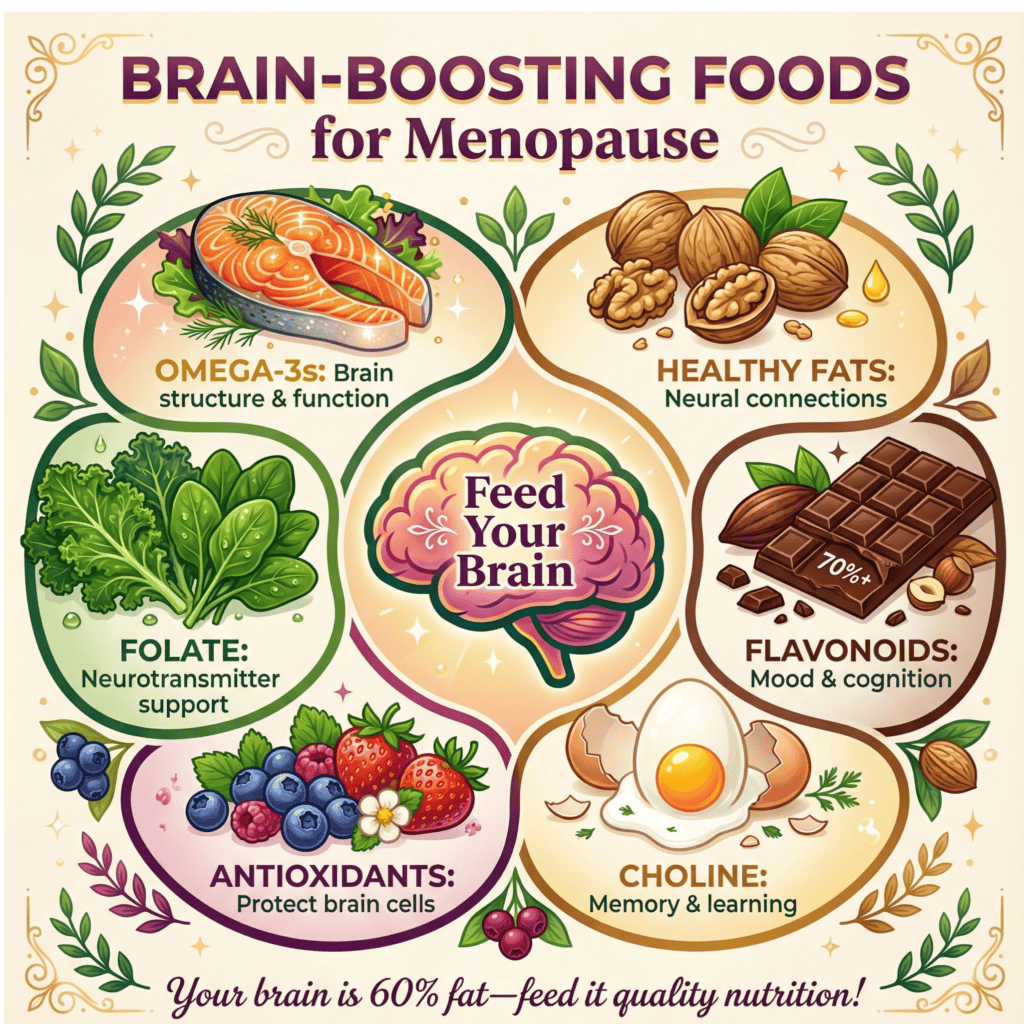
Your brain needs specific nutrients to function optimally, especially during menopause. Focus on foods rich in antioxidants, B vitamins, and minerals that support neurotransmitter production.
Top brain-boosting foods include:
- Leafy greens (spinach, kale, Swiss chard) for folate and antioxidants
- Berries (blueberries, strawberries) for flavonoids that protect brain cells
- Cruciferous vegetables (broccoli, Brussels sprouts) for compounds that support detoxification
- Eggs for choline, which supports acetylcholine production
- Dark chocolate (70% or higher) for flavonoids and mood support
The Role of Healthy Fats (Omega-3s)
Your brain is about 60% fat, and it needs high-quality fats to function properly. Omega-3 fatty acids, particularly DHA (docosahexaenoic acid), are critical for brain structure and function [12].
Research shows that omega-3s support cognitive function, reduce inflammation in the brain, and may even help protect against age-related cognitive decline. The best sources are fatty fish (salmon, sardines, mackerel), walnuts, flaxseeds, and chia seeds.
I recommend eating fatty fish at least twice a week, or supplementing with a high-quality omega-3 if you don’t eat fish regularly.
Protein Timing for Cognitive Function
Protein isn’t just for muscles—it’s essential for brain health. Amino acids from protein are the building blocks for neurotransmitters. Eating adequate protein, especially earlier in the day, can support mental clarity and stable energy.
Aim for 25-30 grams of protein at breakfast and lunch. This helps stabilize blood sugar, provides amino acids for neurotransmitter production, and supports sustained cognitive function throughout the day.
Foods to Avoid That Worsen Brain Fog
Just as some foods support brain health, others actively worsen brain fog. The biggest culprits are refined carbohydrates and added sugars, which create blood sugar instability and inflammation.
Limit or avoid: ultra-processed foods, sugary snacks and drinks, excessive alcohol (which disrupts sleep and depletes B vitamins), and foods you’re sensitive to (common culprits include gluten and dairy for some women).
The Intermittent Fasting Connection: Clearing the Mental Fog
This is where things get really exciting. Intermittent fasting (IF) isn’t just about weight loss—it’s one of the most powerful tools we have for supporting brain health during menopause. I cover this extensively in my book “Intermittent Fasting for Women Over 50 Made Simple.”
How IF Supports Brain Health and Neuroplasticity
Intermittent fasting triggers several mechanisms that directly support cognitive function. When you fast, your body shifts from using glucose as its primary fuel to producing ketones—and your brain loves ketones [13].
Fasting also increases the production of brain-derived neurotrophic factor (BDNF), which is like fertilizer for your brain. BDNF supports the growth of new neurons, strengthens existing neural connections, and enhances learning and memory.
Autophagy and Cellular Cleanup
One of the most powerful benefits of intermittent fasting is autophagy—your body’s cellular cleanup process. During fasting periods, your cells break down and recycle damaged proteins and organelles, including in your brain cells [14].
Think of autophagy as your brain’s housekeeping service. It clears out the cellular “junk” that can interfere with optimal brain function. This cleanup process is particularly important during menopause when your brain is adapting to hormonal changes.
Ketones as Brain Fuel
When you fast for 12-16 hours, your body begins producing ketones from stored fat. Ketones are an incredibly efficient fuel source for your brain—some research suggests they’re even more efficient than glucose [15].
Many women report that once they’re fat-adapted and producing ketones regularly, their mental clarity improves dramatically. The brain fog lifts, focus sharpens, and energy stabilizes.
For menopausal women, I typically recommend starting with a 12-14 hour fasting window (like 7 p.m. to 9 a.m.) and gradually extending it as your body adapts.
Movement for Your Mind: Exercise’s Powerful Effect on Brain Health During Menopause
If I could bottle exercise as a pill for brain health during menopause, it would be a blockbuster drug. The cognitive benefits of movement are that powerful.
BDNF (Brain-Derived Neurotrophic Factor) and Exercise
Remember BDNF, that brain fertilizer I mentioned? Exercise is one of the most reliable ways to increase it. Studies show that both aerobic exercise and resistance training significantly boost BDNF levels [16].
This is huge for menopausal women experiencing brain fog. More BDNF means better neuroplasticity, improved memory formation, enhanced learning, and greater resilience to stress.
Best Types of Exercise for Cognitive Function
You don’t need to run marathons to get cognitive benefits from exercise. Research shows that moderate-intensity aerobic exercise (like brisk walking, cycling, or swimming) for 30-45 minutes, 4-5 times per week, significantly improves cognitive function.
Resistance training is equally important. Lifting weights or doing bodyweight exercises 2-3 times per week supports brain health by improving insulin sensitivity, increasing growth factors, and reducing inflammation.
My recommendation? Combine both. Do aerobic exercise most days and strength training 2-3 times per week for maximum brain benefits.
How Movement Stabilizes Mood
Exercise doesn’t just help with brain fog—it’s remarkably effective for managing menopause mood swings. Physical activity increases endorphins, supports serotonin production, and helps regulate the stress response system [17].
Many women tell me that regular exercise is their best tool for managing anxiety, irritability, and mood swings during menopause. It’s not just about feeling good in the moment—consistent exercise actually remodels your brain’s stress response system over time.
Stress Management: Calming Your Mind to Sharpen Your Brain
You can eat perfectly and exercise religiously, but if you’re chronically stressed, your brain fog will persist. Stress management isn’t optional for cognitive health—it’s essential.
The Cortisol-Cognition Connection
We touched on this earlier, but it’s worth emphasizing: chronic stress and elevated cortisol directly impair cognitive function. Cortisol interferes with memory retrieval, disrupts concentration, and can even damage the hippocampus over time [18].
During menopause, your stress response system becomes more reactive. Things that didn’t bother you before might trigger a stronger stress response. This isn’t weakness—it’s neurobiology.
Practical Stress Reduction Techniques
Effective stress management doesn’t require hours of meditation (though that’s great if you enjoy it). Start with these evidence-based techniques:
Deep breathing: Just 5 minutes of slow, deep breathing activates your parasympathetic nervous system and lowers cortisol. Try the 4-7-8 breath: inhale for 4 counts, hold for 7, exhale for 8.
Time in nature: Research shows that spending time outdoors, especially in green spaces, significantly reduces stress hormones and improves cognitive function.
Social connection: Meaningful relationships and social support buffer stress and support cognitive health. Join a community like our “Thrive in Midlife” Facebook group where you can connect with women on the same journey.
Boundaries: Learning to say no and protecting your time and energy isn’t selfish—it’s essential for brain health.
Mindfulness and Meditation for Menopausal Women
Mindfulness practices have been shown to reduce stress, improve attention, and even increase gray matter density in brain regions involved in memory and emotional regulation [19].
You don’t need to meditate for an hour. Start with just 5-10 minutes a day. Apps like Insight Timer or Calm can guide you. The key is consistency—daily practice, even if brief, is more beneficial than occasional long sessions.
How to Improve Memory During Menopause: Your Personalized Action Plan
Now let’s put this all together into an actionable plan. These strategies to improve memory during menopause work best when implemented gradually and consistently.
Quick Wins for Immediate Improvement
Start here for results you can feel within days to weeks:
1. Prioritize sleep: Aim for 7-8 hours. Keep your bedroom cool (helps with night sweats), dark, and quiet. Consider magnesium glycinate before bed to support sleep quality.
2. Eat protein at breakfast: Start your day with 25-30 grams of protein to stabilize blood sugar and support neurotransmitter production.
3. Move daily: Even a 20-minute walk can boost BDNF and improve mental clarity. Do it outdoors in morning sunlight for bonus circadian rhythm support.
4. Stay hydrated: Dehydration impairs cognitive function. Aim for half your body weight in ounces of water daily.
5. Limit alcohol and caffeine: Both can worsen sleep quality and exacerbate brain fog. If you drink coffee, have it before noon.
Long-Term Strategies for Sustained Cognitive Health
For lasting cognitive improvement, implement these strategies over the next 2-3 months:
1. Try intermittent fasting: Start with a 12-hour fasting window and gradually extend to 14-16 hours as your body adapts. This supports autophagy, increases BDNF, and improves metabolic health.
2. Strength train 2-3 times per week: Build muscle to improve insulin sensitivity and support brain health. You don’t need a gym—bodyweight exercises work great.
3. Optimize your omega-3 intake: Eat fatty fish twice weekly or supplement with high-quality fish oil (aim for 1-2 grams of combined EPA/DHA daily).
4. Develop a consistent stress management practice: Whether it’s meditation, yoga, journaling, or time in nature, find what works for you and do it daily.
5. Consider targeted supplementation: After discussing with your healthcare provider, consider supplements like omega-3s, vitamin D, B-complex vitamins, and magnesium that support brain health.
6. Join a supportive community: Connect with other women navigating menopause. Our “Thrive in Midlife” Facebook group and podcast provide ongoing support, education, and encouragement.
Conclusion: From Foggy to Focused—Your Brain’s Best Years Are Still Ahead
I want to leave you with this truth: menopause brain fog doesn’t have to be your new normal. Yes, your brain is changing. Yes, it can feel scary and frustrating. But with the right strategies, you can not only clear the fog—you can emerge with better cognitive function than you had before.
The women I work with who implement these strategies consistently report remarkable improvements. They tell me their thinking is sharper, their memory is better, and they feel like themselves again. Some even say they feel mentally clearer than they did in their 40s.
Your brain is incredibly resilient and adaptable. The neuroplasticity that allows your brain to change and adapt doesn’t disappear with age—it’s always there, waiting for you to activate it with the right inputs.
This is exactly what I cover in depth in my book “The Menopause Brain Reset.” If you want a comprehensive, science-backed roadmap for optimizing your brain health during menopause and beyond, that’s your next step.
You can also start with our FREE 5-Day Menopause Brain Reset Course, where I walk you through the foundational strategies for clearing brain fog, improving energy, and reclaiming your mental clarity. Or sign up below:
Remember: you’re not losing your mind. You’re navigating a transition. And with the right tools, support, and strategies, your brain’s best years are still ahead of you.
Join us in the “Thrive in Midlife” community—on Facebook, on our podcast, and in our courses. You don’t have to navigate this alone.
Frequently Asked Questions
How to improve brain fog in menopause?
Stay Hydrated: Drink plenty of water throughout the day.
Balanced Diet: Incorporate fruits, vegetables, whole grains, and healthy fats.
Regular Exercise: Engage in physical activity at least 30 minutes a day.
Sleep Hygiene: Aim for 7-9 hours of quality sleep each night.
Stress Management: Practice mindfulness, meditation, or yoga.
Limit Alcohol and Caffeine: Reduce intake to avoid exacerbating symptoms.
Hormone Therapy: Discuss options with a healthcare provider.
Omega-3 Fatty Acids: Include sources like fatty fish or supplements.
Cognitive Exercises: Challenge your brain with puzzles or learning new skills.
Regular Check-ups: Monitor hormonal levels and overall health with a doctor.
What are the symptoms of menopause brain fog?
Symptoms of menopause brain fog include:
Difficulty concentrating
Memory lapses
Confusion
Trouble with multitasking
Mental fatigue
Slower processing of information
Does HRT help with perimenopause brain fog?
Yes, HRT can help alleviate brain fog associated with perimenopause for some women.
How long does menopause memory loss last?
Menopause memory loss can last from a few months to several years, with many women experiencing improvement after menopause is complete.
Recommended External Resources
For additional evidence-based information on menopause and brain health, visit these authoritative sources:
The George Institute for Global Health – https://www.georgeinstitute.org – Research and resources on women’s health across the lifespan
North American Menopause Society (NAMS) – https://www.menopause.org – Comprehensive, evidence-based information on all aspects of menopause
National Institutes of Health (NIH) – https://www.nih.gov – Access to the latest research on women’s health and cognitive function
PubMed Central – https://www.ncbi.nlm.nih.gov/pmc/ – Free access to peer-reviewed research articles on menopause and brain health
Weill Cornell Medicine Brain Health – https://news.weill.cornell.edu – Cutting-edge research on estrogen and brain function during menopause
References
- P. M. Maki, V. W. Henderson, “Cognition and the menopause transition,” Menopause, vol. 23, no. 7, pp. 803-805, Jul. 2016. https://doi.org/10.1097/GME.0000000000000681
- B. B. Sherwin, “Estrogen and cognitive functioning in women,” Endocr. Rev., vol. 24, no. 2, pp. 133-151, Apr. 2003. https://doi.org/10.1210/er.2001-0016
- I. C. Marchant, S. Chabert, J. Martínez-Pinto, et al., “Estrogen, cognitive performance, and functional imaging studies: what are we missing about neuroprotection?” Front. Cell. Neurosci., vol. 16, article 866122, Apr. 2022. https://doi.org/10.3389/fncel.2022.866122
- P. M. Maki and N. G. Jaff, “Menopause and brain fog: how to counsel and treat midlife women,” Menopause, vol. 31, no. 7, pp. 647-649, Jul. 2024. https://doi.org/10.1097/GME.0000000000002382
- D. M. Conde, L. Verdade, C. Valadares, et al., “Menopause and cognitive impairment: A narrative review of current knowledge,” World J. Psychiatry, vol. 11, no. 8, pp. 412-428, Aug. 2021. https://doi.org/10.5498/wjp.v11.i8.412
- R. Marin and M. Diaz, “Estrogen interactions with lipid rafts related to neuroprotection. Impact of brain ageing and menopause,” Front. Neurosci., vol. 12, article 128, Mar. 2018. https://doi.org/10.3389/fnins.2018.00128
- J. Bortz, K. C. Klatt, and T. C. Wallace, “Perspective: estrogen and the risk of cognitive decline: a missing choline(rgic) link?” Adv. Nutr., vol. 13, no. 2, pp. 386-395, Mar. 2022. https://doi.org/10.1093/advances/nmab145
- T. A. Puri, M. K. Sohn, L. M. Sohn, et al., “Association between menopause age and estradiol-based menopausal hormone therapy with cognitive performance,” Neurology, vol. 104, no. 1, article e213995, Jan. 2025. https://doi.org/10.1212/WNL.0000000000213995
- M. P. Walker, “The role of sleep in cognition and emotion,” Ann. N.Y. Acad. Sci., vol. 1156, pp. 168-197, Mar. 2009. https://doi.org/10.1111/j.1749-6632.2009.04416.x
- B. S. McEwen and P. J. Gianaros, “Stress- and allostasis-induced brain plasticity,” Annu. Rev. Med., vol. 62, pp. 431-445, Feb. 2011. https://doi.org/10.1146/annurev-med-052209-100430
- A. M. Rawlings, A. R. Sharrett, A. L. Schneider, et al., “Diabetes in midlife and cognitive change over 20 years: a cohort study,” Ann. Intern. Med., vol. 161, no. 11, pp. 785-793, Dec. 2014. https://doi.org/10.7326/M14-0737
- K. Yurko-Mauro, D. McCarthy, D. Rom, et al., “Beneficial effects of docosahexaenoic acid on cognition in age-related cognitive decline,” Alzheimers Dement., vol. 6, no. 6, pp. 456-464, Nov. 2010. https://doi.org/10.1016/j.jalz.2010.01.013
- M. P. Mattson, K. Moehl, N. Ghena, et al., “Intermittent metabolic switching, neuroplasticity and brain health,” Nat. Rev. Neurosci., vol. 19, no. 2, pp. 63-80, Feb. 2018. https://doi.org/10.1038/nrn.2017.156
- M. Alirezaei, C. C. Kemball, C. T. Flynn, et al., “Short-term fasting induces profound neuronal autophagy,” Autophagy, vol. 6, no. 6, pp. 702-710, Aug. 2010. https://doi.org/10.4161/auto.6.6.12376
- S. C. Cunnane, A. Courchesne-Loyer, C. Vandenberghe, et al., “Can ketones help rescue brain fuel supply in later life? Implications for cognitive health during aging and the treatment of Alzheimer’s disease,” Front. Mol. Neurosci., vol. 9, article 53, Jul. 2016. https://doi.org/10.3389/fnmol.2016.00053
- F. Gholami, J. Mesrabadi, M. Iranpour, and A. Donyaei, “Exercise training alters resting brain-derived neurotrophic factor concentration in older adults: A systematic review with meta-analysis of randomized-controlled trials,” Exp. Gerontol., vol. 199, article 112658, Jan. 2025. https://doi.org/10.1016/j.exger.2024.112658
- A. Tutakhail, F. Diarra, F. Coudoré, I. Mendez-David, and D. J. David, “Harnessing exercise for brain health: BDNF, neuroplasticity and cognitive function,” L’Encéphale, In Press, 2025. https://doi.org/10.1016/j.encep.2025.08.006
- S. J. Lupien, B. S. McEwen, M. R. Gunnar, et al., “Effects of stress throughout the lifespan on the brain, behaviour and cognition,” Nat. Rev. Neurosci., vol. 10, no. 6, pp. 434-445, Jun. 2009. https://doi.org/10.1038/nrn2639
- B. K. Hölzel, J. Carmody, M. Vangel, et al., “Mindfulness practice leads to increases in regional brain gray matter density,” Psychiatry Res., vol. 191, no. 1, pp. 36-43, Jan. 2011. https://doi.org/10.1016/j.pscychresns.2010.08.006