

Table of Contents
You feel it, don’t you? The sudden wave of irritability that washes over you for no apparent reason. The inexplicable tears that well up during a commercial. The flash of rage that feels completely out of character, leaving you wondering who you’ve become.
One moment you’re fine, and the next you’re snapping at your partner over something trivial. Or maybe you find yourself crying in the grocery store aisle, overwhelmed by emotions you can’t quite name.
If you’re nodding along, please know this: you are not alone, and you are not going crazy. You’re experiencing one of the most common and distressing symptoms of perimenopause and menopause: menopause mood swings.
And while it might feel like you’re the only one going through this emotional upheaval, the truth is that millions of women are navigating menopause mood swings right alongside you.
Menopause mood swings are a topic that’s whispered about in hushed tones, but not often discussed openly, leaving so many women feeling isolated and confused.
But I want to pull back the curtain and tell you that what you’re feeling is real, it’s physiological, and most importantly, it’s something you can manage.
These aren’t just bad moods or a sign that you need to “get it together.” They are the result of a profound neuro-hormonal shift in your body, a biological earthquake that’s reshaping your brain chemistry and nervous system.
Understanding the “why” behind menopause mood swings is the first, most powerful step toward reclaiming your calm and regaining control.
And that’s exactly what we’re going to do together in this post.
You’re Not Going Crazy: Why Menopause Mood Swings Feel So Overwhelming
Let’s be absolutely clear about something: the emotional upheaval of menopause is not a personal failing. It’s not a character flaw or a sign of weakness.
It is a biological reality rooted in the dramatic hormonal fluctuations that define this life stage.
For so long, women have been told to just “deal with it” or that they’re being “too emotional,” but the menopause mood swings you’re experiencing are as real as the hot flashes and night sweats.
They are a direct result of changes in your brain chemistry, and they deserve to be treated with the same level of seriousness and compassion.
Think of it this way: your brain has been operating on a certain hormonal fuel for decades. Estrogen and progesterone have been the steady, reliable energy source that kept your mood stable, your emotions balanced, and your stress response in check.
Suddenly, the supply becomes erratic and starts to dwindle. It’s no wonder the system starts to show signs of stress! The feelings of being on an emotional rollercoaster, of not recognizing yourself from one moment to the next, of feeling like a stranger in your own skin—these are all valid responses to a very real physiological shift.
Menopause mood swings aren’t just in your head; they’re in your hormones, your neurotransmitters, and your entire nervous system.
And here’s what’s so important to understand: about 4 in 10 women experience mood symptoms during perimenopause that are similar to PMS.
But unlike PMS, these symptoms may come at times unrelated to your menstrual cycle and can occur for years with no predictable pattern.
This is what’s known as perimenopausal mood instability, and it’s one of the most challenging aspects of menopause mood swings during this transition.
The Hormone Havoc: Understanding the Science Behind the Emotional Rollercoaster
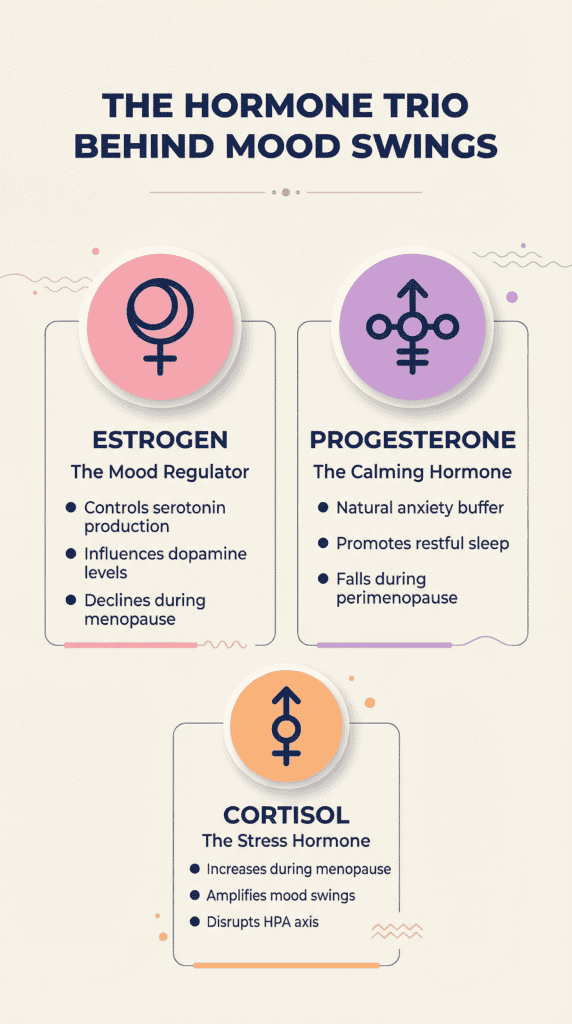
To truly understand menopause mood swings, we need to look at the key players: your hormones. Estrogen, progesterone, and even your stress hormones like cortisol are in a delicate dance, and when that dance is disrupted, your emotional equilibrium is the first thing to go.
Let’s break down exactly what’s happening in your body and brain.
Estrogen’s Exit: How Declining Levels Disrupt Your Brain’s Feel-Good Chemicals
Estrogen is so much more than a reproductive hormone. It’s a master regulator in your brain, directly influencing the production and activity of key neurotransmitters like serotonin and dopamine.
Serotonin is your natural mood stabilizer, promoting feelings of well-being and happiness. Dopamine is linked to your brain’s reward and pleasure centers, giving you that sense of motivation and joy.
When estrogen levels decline during perimenopause and menopause, it’s like turning down the volume on these crucial “feel-good” chemicals.
The result? Increased irritability, sadness, and a general sense of flatness that can be the hallmark of menopause mood swings.
You might find that things that used to bring you joy no longer have the same effect.
This emotional flatness is one of the most distressing aspects of menopause mood swings for many women.
Or you might feel a pervasive sense of sadness that seems to have no clear cause.
This is your brain trying to function with less of the chemical support it’s been relying on for decades.
Research has shown that when estrogen levels drop, serotonin function can be directly affected, contributing to increased irritability and sadness.
This is why so many women experience menopause mood swings that look and feel like depression during this time.
It’s not that you’re becoming depressed as a person; it’s that your brain chemistry is changing in ways that produce depressive symptoms.
Progesterone’s Plunge: Losing the “Calming” Hormone
Progesterone is your body’s natural calming agent. It has a sedative-like effect, helping to promote sleep and reduce anxiety.
Think of progesterone as your internal anxiety buffer, the hormone that helps you stay calm under pressure and bounce back from stress.
As progesterone levels fall during perimenopause, you lose this natural buffer against stress and anxiety.
This can leave you feeling wired, anxious, and unable to cope with things you’d normally handle with ease.
You might find yourself overreacting to minor stressors, feeling a constant sense of unease, or struggling with racing thoughts that keep you up at night.
This loss of progesterone is a key reason why so many women experience perimenopause anxiety and irritability.
It’s also why things that never bothered you before suddenly feel overwhelming and unmanageable, contributing to the intensity of menopause mood swings.
Johns Hopkins Medicine research shows that falling progesterone levels can trigger irritability, anxiety, or mood swings that make you less able to cope with things you’d normally let roll off your back.
For some women, these hormonal dips and resulting menopause mood swings can even set off a depressive episode, especially for those who’ve gone through major depression in the past.
The Cortisol Connection: How Stress Hormones and Menopause Fuel the Fire
Now, let’s add stress to the mix, because this is where things get really interesting—and really challenging. The hypothalamic-pituitary-adrenal (HPA) axis is your body’s central stress response system. It’s the command center that controls how your body responds to stress, regulating the release of cortisol, your primary stress hormone.
Now, let’s add stress to the mix, because this is where things get really interesting—and really challenging.
The hypothalamic-pituitary-adrenal (HPA) axis is your body’s central stress response system.
It’s the command center that controls how your body responds to stress, regulating the release of cortisol, your primary stress hormone.
Research published in Frontiers in Endocrinology found that perimenopause is characterized by erratic ovarian hormone fluctuations and is a stage of the female reproductive lifecycle associated with increased depression susceptibility.
The HPA axis is one of the main targets of these functional alterations, and with its key role in stress response, it becomes an etiological factor in vulnerable windows for depression across the female lifespan.
During perimenopause, this system can become dysregulated, leading to chronically elevated levels of cortisol.
High cortisol can exacerbate mood swings, increase anxiety, and contribute to feelings of being constantly on edge.
It’s a vicious cycle: hormonal changes cause stress, and stress hormones make the emotional symptoms of menopause even worse.
This is a critical piece of the puzzle when it comes to managing the menopause emotional rollercoaster.
It’s More Than Just Hormones: The Other Factors Fueling Your Moods
While hormonal imbalance and mood are intrinsically linked, they aren’t the only factors contributing to menopause mood swings.
The physical symptoms of menopause and the life stressors that often coincide with this stage can create a perfect storm for emotional volatility.
Understanding these additional factors can help you develop a more comprehensive approach to managing your mood.
The Sleep-Mood Catastrophe
Night sweats, anxiety, and hormonal shifts can wreak havoc on your sleep.
And as anyone who has ever had a bad night’s sleep knows, sleep deprivation is a direct trigger for irritability and moodiness.
But the connection between sleep and mood during menopause goes even deeper than that.
Research from Johns Hopkins Medicine shows that poor sleep can make you up to 10 times more likely to become depressed.
When you’re not getting the restorative sleep you need, your ability to regulate your emotions is severely compromised, making menopause mood swings feel even more intense.
Life’s Perfect Storm: Midlife Stressors
Perimenopause often hits at a time when life is already demanding.
You may be juggling a career at its peak, caring for aging parents who need increasing support, and navigating changes in your own family as children grow up and leave home.
These external pressures can significantly compound the emotional challenges of menopause, making it even harder to cope with the internal hormonal shifts.
7 Essential Strategies to Regain Control and Find Your Calm
Now for the good news: you are not powerless. There are so many effective, science-backed strategies you can use to manage menopause mood swings and reclaim your emotional well-being.
These strategies have helped countless women reduce the frequency and intensity of menopause mood swings and feel like themselves again.
Here are seven essential strategies to get you started.
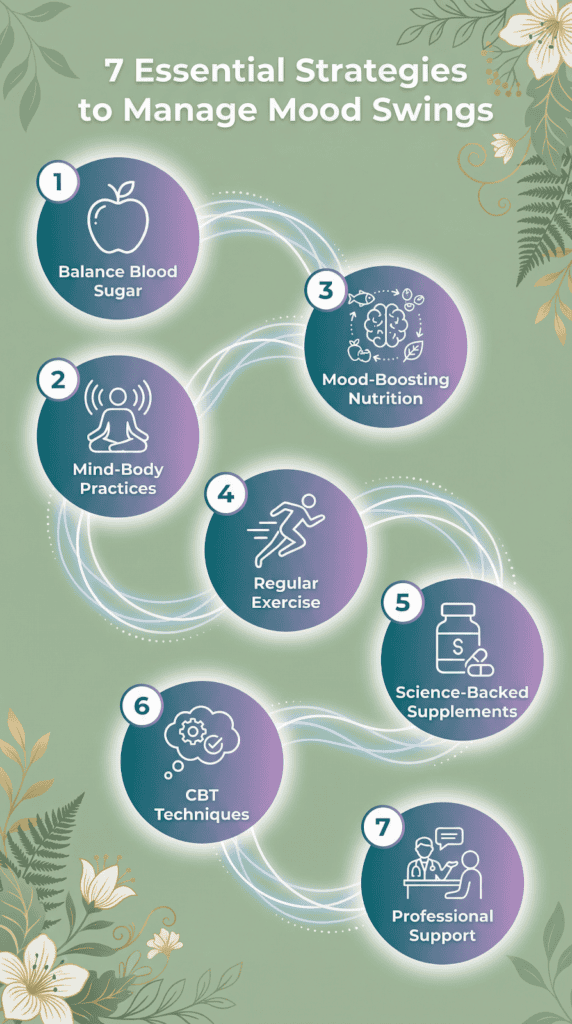
Strategy 1: Balance Your Blood Sugar to Stabilize Your Mood
Blood sugar spikes and crashes can mimic and magnify menopause mood swings.
Focus on a diet rich in protein, healthy fats, and fiber to keep your blood sugar stable throughout the day.
Start your morning with a protein-rich breakfast and avoid refined carbohydrates and sugary foods that can send you on a blood sugar rollercoaster.
Practical tip: Eat every 3-4 hours to maintain stable blood sugar levels. Never skip meals, especially breakfast.
Strategy 2: Embrace Mind-Body Practices for Immediate Relief

Mind-body practices are powerful tools for calming your nervous system and reducing the intensity of menopause mood swings.
Research has shown that practices like yoga, meditation, and deep breathing can significantly reduce anxiety and improve mood in menopausal women.
Practical tip: Start with just 5 minutes of deep breathing each morning. Breathe in for 4, hold for 4, breathe out for 6.
Strategy 3: Fuel Your Brain with Mood-Boosting Nutrition
What you eat has a direct impact on your brain chemistry. Incorporate foods rich in omega-3 fatty acids (salmon, walnuts), magnesium (leafy greens, nuts), and B vitamins (lean meats, eggs) to support healthy neurotransmitter function.
Practical tip: Avoid trigger foods like caffeine, alcohol, spicy foods, and high-sugar foods that can worsen mood swings.
Strategy 4: Move Your Body to Move Your Mood
Exercise is one of the most powerful antidepressants available.
Regular physical activity boosts serotonin and endorphins, reduces cortisol, and improves sleep quality.
Even a brisk 30-minute walk each day can make a significant difference.
Practical tip: Exercise outdoors whenever possible for additional mood-boosting benefits from natural light and nature.
Strategy 5: Consider Science-Backed Supplements
Several supplements have been shown to support mood during menopause: magnesium glycinate (300-400mg before bed), L-theanine (200mg daily), adaptogenic herbs like Ashwagandha, omega-3 fatty acids, and vitamin D.
Always consult your doctor before starting supplements.
Strategy 6: Master Your Stress with Cognitive Behavioral Therapy (CBT) Techniques
CBT helps you identify and change negative thought patterns.
The NICE guidelines recommend menopause-specific CBT for women experiencing depressed mood during menopause.
CBT can teach you practical skills for recognizing and reframing negative thoughts.
Practical tip: Start a thought journal. When you notice a strong emotion, write down what you were thinking, then challenge that thought.
Strategy 7: Know When to Seek Professional Support
If your menopause mood swings are severe and impacting your daily life, seek professional support.
A healthcare provider can help you explore options including hormone therapy, antidepressants, and other medical interventions.
Conclusion: You Have the Power to Navigate Menopause Mood Swings and Thrive
Navigating the emotional landscape of menopause can feel daunting, but I want you to leave this page with a renewed sense of hope and empowerment.
The menopause mood swings you’re experiencing are not a life sentence.
With the right strategies and support, you can significantly reduce their impact on your daily life.
This is not about “fixing” yourself; it’s about supporting your body and brain through a natural, albeit challenging, process.
You have the power to not just survive menopause, but to thrive in this new chapter of your life.
You deserve to feel calm, balanced, and in control of your emotions.
If you’re ready to take the next step and dive deeper into the science-backed strategies that have helped thousands of women reclaim their calm and clarity, I invite you to join my FREE 5-Day Menopause Brain Reset Course below
Join our community of women who are supporting each other through this transition and discovering that menopause can be the beginning of your most vibrant, empowered chapter yet.
Frequently Asked Questions
How to control mood swings with menopause?
Maintain a balanced diet rich in fruits, vegetables, whole grains, and lean proteins.
Stay hydrated and limit caffeine and alcohol intake.
Engage in regular physical activity, aiming for at least 30 minutes most days.
Practice stress-reduction techniques such as yoga, meditation, or deep breathing exercises.
Establish a consistent sleep routine and ensure adequate rest.
Consider hormone replacement therapy (HRT) after consulting with a healthcare provider.
Speak with a therapist or counselor for emotional support.
Monitor and manage symptoms with the help of a healthcare professional.
What are the 4 stages of perimenopause?
The four stages of perimenopause are:
1. Early Perimenopause
(Often starts mid-40s, sometimes earlier)
What’s happening hormonally
Estrogen is still being produced, but it’s becoming erratic
Progesterone often declines first
Hormones fluctuate more than they drop
What women notice
Periods are mostly regular, but feel different
PMS worsens or changes
New anxiety, irritability, or low mood
Sleep becomes lighter or more disrupted
Subtle brain fog or reduced stress tolerance
Common misunderstanding
“This can’t be menopause — my periods are normal.”
This stage is often missed or dismissed because nothing looks dramatic yet. Many women are told they’re “just stressed” or “getting older.”
Key truth
Early perimenopause is less about loss and more about instability. The nervous system feels it before blood tests do.
2. Late Perimenopause
(Often late 40s to early 50s — the most intense stage)
What’s happening hormonally
Estrogen swings wildly, then trends downward
Progesterone is often very low
Ovulation becomes inconsistent
What women notice
Periods become irregular, heavy, or unpredictable
Hot flashes and night sweats
Significant sleep disruption
Noticeable brain fog and memory lapses
Mood swings, rage, tears, anxiety
Weight gain (especially around the belly)
Libido often drops
Common misunderstanding
“I’m falling apart.”
This is the stage where women most fear they’re broken or mentally declining.
Key truth
Late perimenopause is often the hardest phase, not because something is wrong — but because the brain and body are adapting to major hormonal shifts.
3. Menopause
(A single point in time, not a long stage)
What it actually is
Menopause is defined as 12 consecutive months without a period
It’s a diagnosis made in hindsight
What’s happening hormonally
Estrogen and progesterone are consistently low
Hormonal fluctuations calm down — but at a lower baseline
What women notice
Some symptoms ease (especially extreme swings)
Others persist (sleep, brain fog, joint pain)
Emotional clarity may start to return
A sense of “okay… now what?”
Common misunderstanding
“Menopause is when everything gets bad.”
In reality, many women find menopause itself is less chaotic than late perimenopause.
Key truth
Menopause is a threshold, not an ending. It marks the transition into a new hormonal reality.
4. Postmenopause
(The years after menopause — often 50s onward)
What’s happening hormonally
Estrogen remains low and stable
The body adapts to this new baseline
Other systems (brain, metabolism, bones) become more influential
What women notice
Hot flashes may fade (for some)
Sleep and energy may improve gradually
Brain fog often lifts with support
New focus on strength, bone health, cognition
Identity shifts: “Who am I now?”
Common misunderstanding
“This is decline.”
Postmenopause is often portrayed as loss — but many women report greater confidence, clarity, and self-trust once they’re supported.
Key truth
Postmenopause can be a highly creative, powerful phase when women work with their biology instead of fighting it.
Will HRT help with mood swings?
HRT can help with mood swings for some individuals, particularly those experiencing hormonal changes due to menopause or other conditions.
What are the mood stabilizers for perimenopause?
Common mood stabilizers for perimenopause include:
**SSRIs**: Selective Serotonin Reuptake Inhibitors (e.g., fluoxetine, sertraline)
**SNRIs**: Serotonin-Norepinephrine Reuptake Inhibitors (e.g., venlafaxine, duloxetine)
**Gabapentin**
**Lamotrigine**
**Lithium** (in some cases)
**Buspirone**
Consult with a healthcare professional for personalized advice.
Want to Learn More? Trusted Resources for Your Journey
1. Mayo Clinic – Perimenopause: Symptoms and Causes
https://www.mayoclinic.org/diseases-conditions/perimenopause/symptoms-causes/syc-20354666
2. Cleveland Clinic – Menopause Anxiety and Mental Health
https://health.clevelandclinic.org/is-menopause-causing-your-mood-swings-depression-or-anxiety
3. North American Menopause Society (NAMS) – Mental Health
https://menopause.org/patient-education/menopause-topics/mental-health
4. NIH/PubMed Central – Hormone Replacement Therapy for Menopausal Mood
https://pmc.ncbi.nlm.nih.gov/articles/PMC11514567/
5. American College of Obstetricians and Gynecologists (ACOG) – Hormone Therapy for Menopause
https://www.acog.org/womens-health/faqs/hormone-therapy-for-menopause
References
[1] N. E. Silver, “Mood Changes During Perimenopause Are Real. Here’s What to Know.,” American College of Obstetricians and Gynecologists, Apr. 2023. [Online]. Available: https://www.acog.org/womens-health/experts-and-stories/the-latest/mood-changes-during-perimenopause-are-real-heres-what-to-know
[2] “Can Menopause Cause Depression?,” Johns Hopkins Medicine. [Online]. Available: https://www.hopkinsmedicine.org/health/wellness-and-prevention/can-menopause-cause-depression
[3] L. Hantsoo et al., “The role of the hypothalamic-pituitary-adrenal axis in depression across the female reproductive lifecycle: current knowledge and future directions,” Front. Endocrinol. (Lausanne), vol. 14, p. 1295261, Dec. 12, 2023. [Online]. Available: https://doi.org/10.3389/fendo.2023.1295261
[4] “Natural Ways To Deal With Mood Swings & Irritability,” My Menopause Centre, Feb. 19, 2023. [Online]. Available: https://www.mymenopausecentre.com/blog/natural-ways-to-deal-with-mood-swings-irritability/
[5] “Natural Remedies for Menopausal Mood Swings,” NatureMed, Jun. 26, 2025. [Online]. Available: https://naturemed.org/natural-remedies-for-menopausal-mood-swings/
[6] “Supplements for Perimenopause Mood Swings & Anxiety,” Versalie. [Online]. Available: https://www.versalie.com/collections/mood
[7] M. S. Hunter, “Cognitive behavioral therapy for menopausal symptoms,” Climacteric, vol. 24, no. 1, pp. 51-56, 2021. [Online]. Available: https://doi.org/10.1080/13697137.2020.1777965