

Table of Contents
Why Menopause Chronic Fatigue Is So Much More Than “Just Being Tired”
If you’re reading this, you probably know the feeling all too well. You wake up after what should have been a full night’s sleep, yet you feel like you haven’t rested at all. Your body feels heavy, your brain is foggy, and the simple thought of getting through the day’s tasks feels like climbing a mountain. You’re not just tired; you’re experiencing menopause chronic fatigue.
I want to start by validating exactly what you’re going through. So many women sit in my office, close to tears, telling me they feel like they’re losing their minds or that they’ve suddenly become lazy. They haven’t. Menopause chronic fatigue is a very real, physiological condition driven by profound shifts in your body’s chemistry. It’s not a character flaw, and it’s certainly not something you just have to accept as your “new normal.”
The truth is, your body is working incredibly hard right now. The menopausal transition is a major neurological and endocrine remodeling project. Just like a house undergoing a massive renovation, there’s a lot of dust, disruption, and energy being diverted behind the scenes. Understanding the root causes of menopause chronic fatigue is the first step toward reclaiming your vitality. You aren’t broken; your body is just asking for a different kind of support.
When you are dealing with menopause chronic fatigue, every single system in your body feels the impact. Your digestion might slow down, your immune system might feel compromised, and your emotional resilience is often stretched to its absolute limit. It is completely understandable that you feel overwhelmed. The sheer weight of menopause chronic fatigue can make you question your own identity. But I want to assure you that this is a phase, and with the right strategies, you can navigate through this menopause chronic fatigue and come out the other side feeling vibrant and energized once again.
The Science Behind Fatigue During Menopause: What’s Really Happening in Your Body
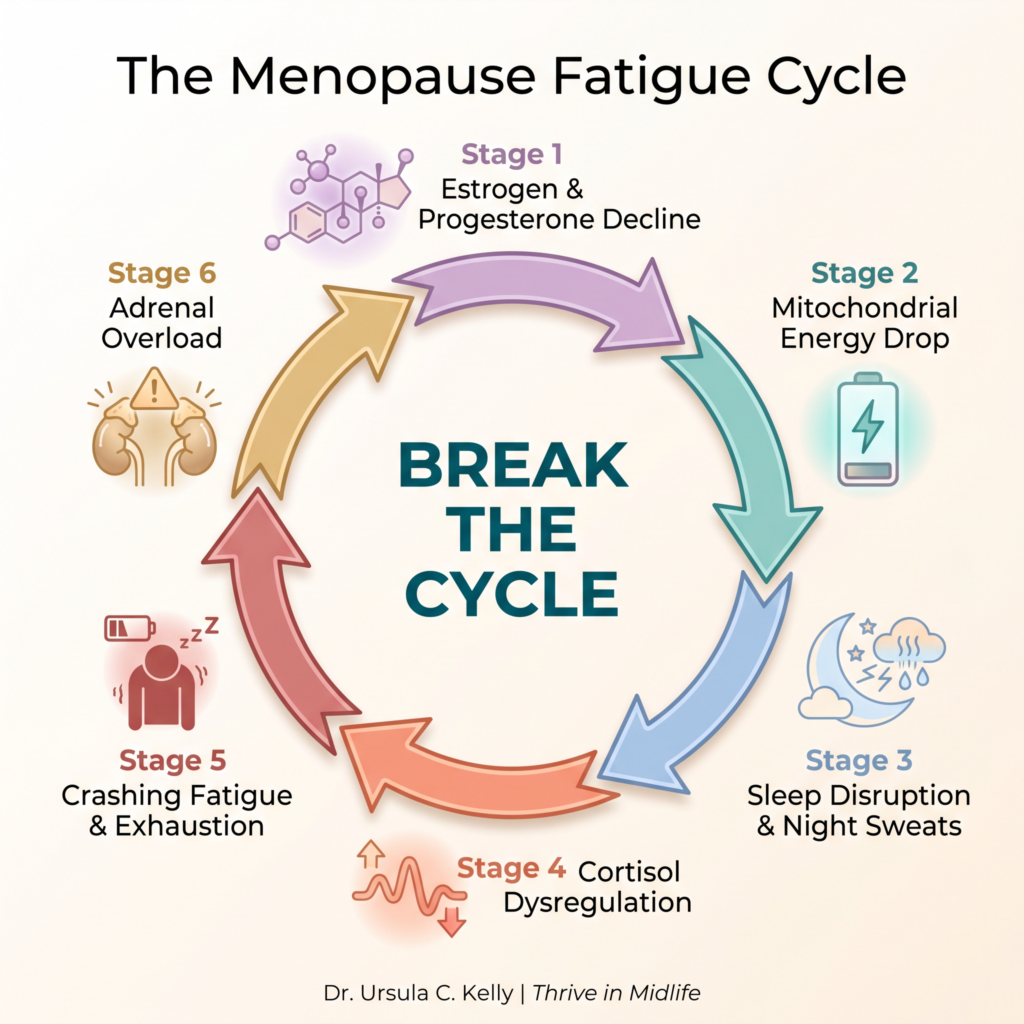
To understand why you’re feeling this way, we need to look under the hood. Fatigue during menopause isn’t just a byproduct of getting older; it’s a direct result of how fluctuating hormones impact your cellular energy production and your stress response systems. When you experience fatigue during menopause, it is a clear signal that your internal environment is shifting.
How Estrogen Decline Sabotages Your Energy at the Cellular Level
Estrogen is often thought of purely as a reproductive hormone, but it’s actually a master metabolic regulator. One of its most crucial jobs is supporting your mitochondria—the tiny power plants inside your cells that generate energy (ATP). Estrogen helps these power plants run efficiently and protects them from damage [1].
When estrogen levels begin to fluctuate and eventually decline during perimenopause and menopause, your mitochondria lose that vital support. They become less efficient at converting the food you eat into the energy you need. This drop in cellular energy production is a primary driver of menopause chronic fatigue. Your cells are literally producing less power, which translates to you feeling physically and mentally drained [2]. It’s like trying to run your smartphone on a battery that won’t hold a charge. No matter how long you plug it in, it drains quickly.
This cellular energy crisis is why menopause chronic fatigue feels so different from the tiredness you experienced in your twenties or thirties. Back then, a busy week might leave you tired, but a weekend of rest would restore you. Now, because the mitochondria themselves are struggling without their usual estrogen support, the energy deficit is structural. Overcoming menopause chronic fatigue requires addressing this cellular foundation.
The Sleep-Cortisol Spiral That Keeps You Exhausted
Another major factor contributing to fatigue during menopause is the disruption of your sleep architecture. As estrogen and progesterone drop, many women experience hot flashes and night sweats, which fragment sleep. But even without noticeable night sweats, the hormonal shifts can change the quality of your sleep, reducing the amount of deep, restorative sleep you get [3].
This sleep fragmentation triggers a vicious cycle. Poor sleep stresses the body, leading to an increase in cortisol, your primary stress hormone. Elevated cortisol, especially in the evening or at night, further disrupts your sleep, making it harder to fall asleep or stay asleep. This chronic sleep disruption and cortisol dysregulation are key components of menopause chronic fatigue [4]. You’re caught in a loop where you’re too tired to function well during the day, but too wired or uncomfortable to sleep deeply at night.
When you are trapped in this sleep-cortisol spiral, menopause chronic fatigue becomes a daily reality. Your body never gets the chance to fully repair and regenerate. Breaking this cycle is absolutely essential if you want to eliminate menopause chronic fatigue and restore your natural energy rhythms.
Try Our New Tool
Understanding Crashing Fatigue in Menopause: When Exhaustion Hits Like a Wall
While a baseline level of tiredness is common, many women experience something much more intense: crashing fatigue in menopause. This isn’t the gradual winding down you feel at the end of a long day. It’s a sudden, overwhelming wave of exhaustion that can hit you out of nowhere, often in the middle of the afternoon or even shortly after waking up.
What Crashing Fatigue Actually Feels Like
Women describe crashing fatigue in menopause as feeling like someone suddenly pulled the plug on their energy supply. One moment you’re functioning relatively normally, and the next, you feel an intense, almost paralyzing need to lie down and close your eyes. Your limbs might feel heavy, your brain becomes incredibly foggy, and pushing through feels physically impossible. It’s a profound, systemic energy crash that demands immediate rest.
When crashing fatigue in menopause strikes, it can be terrifying. You might be driving, in a meeting, or trying to cook dinner, and suddenly you feel as though you cannot keep your eyes open. This extreme manifestation of menopause chronic fatigue is a clear indicator that your body’s energy reserves are completely depleted.
Why Crashing Fatigue in Menopause Is Different from Normal Tiredness
This sudden onset is what distinguishes crashing fatigue in menopause from standard tiredness. It’s often linked to the erratic hormonal fluctuations characteristic of perimenopause. When estrogen and progesterone levels spike and plummet unpredictably, it sends shockwaves through your metabolic and nervous systems. Additionally, if your blood sugar is unstable—which becomes more common as estrogen declines and insulin sensitivity changes—a sudden drop in blood glucose can trigger this intense crashing fatigue in menopause. Your body is essentially sounding an alarm, forcing you to stop and conserve energy.
Addressing crashing fatigue in menopause requires a multi-pronged approach. You can’t just push through it; you have to stabilize the underlying hormonal and metabolic fluctuations that are causing these sudden energy drops. This is a critical step in managing overall menopause chronic fatigue.
Chronic Fatigue Syndrome and Menopause: Is There a Connection?
Because the exhaustion can be so severe, many women wonder if they’ve developed a more serious condition. The relationship between chronic fatigue syndrome and menopause is an area of growing research and significant clinical interest. Midlife women are actually two to four times more likely to experience debilitating forms of syndromic fatigue compared to other demographics [5].
The Overlap Between CFS Symptoms and Menopause Fatigue
The symptoms of myalgic encephalomyelitis/chronic fatigue syndrome (ME/CFS) and severe menopause chronic fatigue can look remarkably similar. Both involve profound exhaustion that isn’t relieved by rest, brain fog, unrefreshing sleep, and sometimes muscle or joint pain. Research suggests that the hormonal shifts of menopause can exacerbate existing CFS or, in some cases, act as a trigger for women who are genetically or environmentally predisposed [6]. The intersection of chronic fatigue syndrome and menopause highlights how deeply hormonal health is intertwined with our overall energy and immune function.
When we look at chronic fatigue syndrome and menopause, we see that the decline in estrogen and the subsequent stress on the adrenal glands can create a perfect storm for profound exhaustion. If you are dealing with menopause chronic fatigue that feels completely debilitating, it is important to understand this connection.
When to Seek Further Evaluation
While menopause chronic fatigue is common, it’s crucial not to dismiss all severe exhaustion as “just menopause.” If your fatigue is accompanied by severe post-exertional malaise (where even minor physical or mental effort causes a massive crash lasting days), swollen lymph nodes, or persistent sore throat, it’s important to discuss the possibility of chronic fatigue syndrome and menopause with a knowledgeable healthcare provider. You deserve a comprehensive evaluation to ensure you’re treating the right root cause.
Distinguishing between severe menopause chronic fatigue and chronic fatigue syndrome and menopause requires careful medical assessment. Don’t hesitate to advocate for yourself if you feel your symptoms go beyond typical menopause chronic fatigue.
The Adrenal Glands: Your Unsung Energy Heroes During Menopause
To truly understand and resolve menopause chronic fatigue, we have to talk about the adrenal glands. These two small, walnut-shaped glands sitting on top of your kidneys are your body’s stress management center, producing cortisol and adrenaline. But during midlife, they take on a critical new job.
How the Adrenal Glands Take Over During the Menopausal Transition
As your ovaries gradually wind down their production of estrogen and progesterone, the adrenal glands are designed to step up and provide a backup supply of sex hormones. They produce DHEA and androstenedione, which your body can convert into the estrogen and testosterone it needs to maintain bone health, brain function, and energy [7].
However, if you enter the menopausal transition already chronically stressed—from decades of juggling career, family, caregiving, and life’s demands—the adrenal glands are already overworked. When they are forced to manage chronic stress and take over hormone production, they can struggle to keep up. This adrenal overload is a massive, often overlooked contributor to menopause chronic fatigue. When the adrenal glands can’t produce adequate backup hormones or regulate cortisol properly, your energy levels plummet [8].
The health of the adrenal glands is absolutely paramount when combating menopause chronic fatigue. If the adrenal glands are exhausted, they cannot provide the hormonal buffer you need during this transition.
Supporting Adrenal Health Naturally
Because the adrenal glands are so vital during this transition, supporting them is non-negotiable if you want to overcome menopause chronic fatigue. This means aggressively managing stress, prioritizing rest, and providing your body with the nutrients it needs to synthesize hormones and regulate the HPA (hypothalamic-pituitary-adrenal) axis. When you support the adrenal glands, you build a stronger foundation for your energy and overall hormonal balance.
Nurturing the adrenal glands is one of the most effective ways to reduce menopause chronic fatigue. By giving the adrenal glands the rest and nutrients they require, you empower your body to handle the menopausal transition with far more resilience.








7 Proven Strategies to Reclaim Your Energy from Menopause Fatigue
Understanding the “why” behind your exhaustion is empowering, but you also need actionable steps to fix it. You don’t have to accept menopause chronic fatigue as your permanent reality. Here are seven evidence-based strategies to help you rebuild your energy from the cellular level up and conquer menopause fatigue once and for all.
1. Prioritize Sleep Architecture
Since sleep disruption is a primary driver of menopause chronic fatigue, fixing your sleep is step one. But it’s not just about time in bed; it’s about sleep architecture—getting enough deep, restorative sleep. When you improve your sleep architecture, you directly combat menopause chronic fatigue.
- Keep it cool: Keep your bedroom temperature between 60-65°F (15-18°C) to minimize night sweats.
- Consistent timing: Go to bed and wake up at the exact same time every day, even on weekends, to regulate your circadian rhythm.
- Wind down: Create a strict electronic curfew one hour before bed. The blue light from screens suppresses melatonin, the hormone you need to fall and stay asleep.
2. Balance Blood Sugar to Stabilize Energy
Unstable blood sugar is a massive contributor to crashing fatigue in menopause. When your blood sugar spikes and crashes, your energy does too, and it places extra stress on the adrenal glands. Stabilizing your blood sugar is a powerful tool against menopause chronic fatigue.
- Protein focus: Aim for 25-30 grams of high-quality protein at every meal. Protein stabilizes blood sugar and provides the building blocks for neurotransmitters that keep you alert.
- Don’t skip meals: Eating balanced meals every 3-4 hours prevents the blood sugar dips that trigger sudden exhaustion.
- Fiber first: Start your meals with fiber-rich vegetables to slow the absorption of glucose into your bloodstream.
3. Support Your Mitochondria with Targeted Nutrition
Remember those cellular power plants? They need specific nutrients to function optimally, especially when estrogen is declining. To combat menopause chronic fatigue, you need to feed your mitochondria. When your mitochondria are healthy, menopause chronic fatigue begins to lift.
- Antioxidant-rich foods: Berries, dark leafy greens, and colorful vegetables protect mitochondria from oxidative stress.
- Healthy fats: Omega-3 fatty acids found in wild-caught salmon, chia seeds, and walnuts are crucial for mitochondrial membrane health.
- Hydration: Even mild dehydration can significantly impair cellular energy production. Aim for at least half your body weight in ounces of water daily.
4. Move Your Body Strategically
When you’re dealing with menopause chronic fatigue, the last thing you probably want to do is exercise. However, strategic movement actually creates energy by stimulating the production of new mitochondria (a process called mitochondrial biogenesis). This is essential for overcoming menopause chronic fatigue.
- Avoid overtraining: Intense, grueling workouts can further stress the adrenal glands and worsen fatigue.
- Gentle consistency: Focus on 30 minutes of moderate movement daily, like brisk walking, swimming, or cycling.
- Strength training: Building muscle mass improves insulin sensitivity and provides a larger reservoir for storing energy (glycogen). Aim for two to three sessions of resistance training per week.
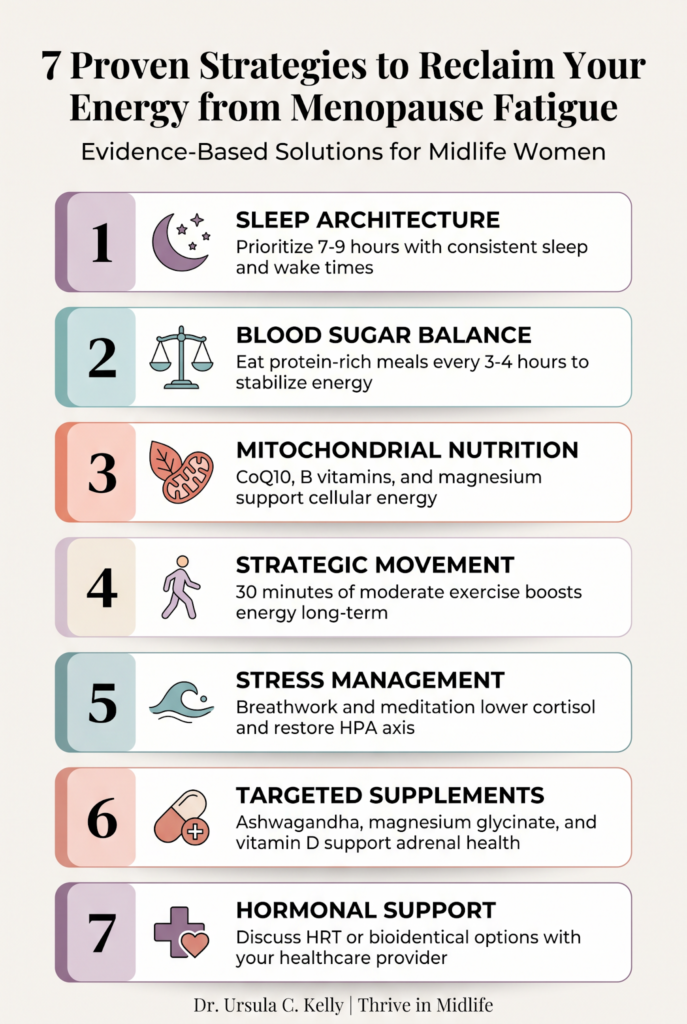
5. Manage Stress and Support Your HPA Axis
Because the adrenal glands are so critical right now, actively managing stress is essential to resolving menopause chronic fatigue. You have to signal to your body that it is safe. A calm nervous system is the antidote to menopause chronic fatigue.
- Breathwork: Just five minutes of deep, diaphragmatic breathing (like box breathing: inhale for 4, hold for 4, exhale for 4, hold for 4) can lower cortisol levels and calm your nervous system.
- Mindful pauses: Build short, 2-minute breaks into your day to step away from screens, stretch, and reset.
- Saying no: Protecting your energy means setting boundaries. It’s okay to decline invitations or delegate tasks that drain you.
6. Consider Targeted Supplementation
While food should always come first, targeted supplements can provide the extra support needed to overcome severe menopause fatigue. Always discuss new supplements with your healthcare provider. These supplements can be powerful allies against menopause chronic fatigue.
- Magnesium Glycinate: Crucial for cellular energy production and highly effective for improving sleep quality and calming the nervous system.
- CoQ10: A vital nutrient for mitochondrial function that naturally declines with age.
- Adaptogens: Herbs like Ashwagandha or Rhodiola can help the adrenal glands modulate the stress response and balance cortisol levels.
7. Explore Hormonal Support Options
If lifestyle and nutritional strategies aren’t enough to resolve your menopause chronic fatigue, it’s worth exploring hormonal support. Addressing the hormonal root cause is often the key to eliminating menopause chronic fatigue.
- Menopausal Hormone Therapy (MHT): Replacing the estrogen and progesterone your body is missing can directly address the root cause of the fatigue, improving sleep, protecting mitochondria, and supporting the adrenal glands [9].
- Bioidentical options: Many women find success with bioidentical hormones that closely mimic the body’s natural production.
- Individualized care: Hormone therapy isn’t one-size-fits-all. Work with a menopause-certified practitioner to determine if it’s safe and appropriate for your specific health history.

Conclusion: You Don’t Have to Live with Menopause Fatigue
I want to leave you with a message of hope. Menopause chronic fatigue can feel incredibly isolating and overwhelming, but it is not a permanent sentence. Your body is going through a profound transition, and the exhaustion you’re feeling is a signal that it needs a different kind of care and support. You can absolutely overcome menopause chronic fatigue.
By understanding the roles of your mitochondria, your sleep architecture, and the adrenal glands, you can start making targeted changes. Whether it’s prioritizing protein, setting boundaries to manage stress, or exploring hormonal support, every small step you take builds a stronger foundation for your vitality. Beating menopause chronic fatigue is a journey, but it is one you can win.
You deserve to wake up feeling refreshed. You deserve to have the energy to pursue your passions, connect with your loved ones, and enjoy this vibrant second chapter of your life. Be patient with yourself, implement these strategies consistently, and know that reclaiming your energy from menopause chronic fatigue is absolutely possible.
If you’re ready to take the next step in reclaiming your energy and mental clarity, I invite you to join my FREE 5-Day Menopause Brain Reset Course. In this course, we dive deeper into the specific protocols that support your mitochondria, balance your blood sugar, and clear the fog so you can feel like yourself again. You don’t have to navigate this transition alone—join our community of women who are actively taking back their health and vitality.
Further Reading & Authoritative Sources
- Early Menopause and Other Gynecologic Risk Indicators for Chronic Fatigue Syndrome — NIH/PubMed Central https://pmc.ncbi.nlm.nih.gov/articles/PMC5745581/
- Gynecological History in Chronic Fatigue Syndrome — NIH/PubMed Central
https://pmc.ncbi.nlm.nih.gov/articles/PMC3017420/ - Role of Estrogen in the Regulation of Central and Peripheral Energy Homeostasis — NIH/PubMed Central
https://pmc.ncbi.nlm.nih.gov/articles/PMC10504839/ - Are You Just Tired or Are You Menopause Tired? — The Menopause Society
https://menopause.org/press-releases/are-you-just-tired-or-are-you-menopause-tired - Hormonal Fluctuations and ME/CFS in Women: The Role of Menstrual Cycle and Menopause — AMMES (Academy of ME/CFS and Related Syndromes ) https://ammes.org/2025/09/15/hormonal-fluctuations-and-myalgic-encephalomyelitis-chronic-fatigue-syndrome-in-women-the-role-of-menstrual-cycle-and-menopause/
FAQs
How to increase energy during menopause?
– Maintain a balanced diet rich in whole foods, lean proteins, fruits, and vegetables.
– Stay hydrated by drinking plenty of water throughout the day.
– Incorporate regular exercise, such as walking, swimming, or yoga, to boost energy levels.
– Prioritize sleep hygiene by establishing a consistent sleep schedule and creating a restful environment.
– Manage stress through mindfulness practices, meditation, or deep-breathing exercises.
– Consider natural supplements like vitamin D, B vitamins, or magnesium, after consulting with a healthcare professional.
– Limit caffeine and alcohol intake, as they can disrupt sleep and energy levels.
– Stay socially active to enhance mood and energy.
Does menopause fatigue ever go away?
Menopause fatigue can improve over time, but experiences vary. Many women find that lifestyle changes, such as regular exercise, a balanced diet, and stress management techniques, help alleviate fatigue. For persistent fatigue, consulting a healthcare provider is recommended.
What are the 7 symptoms of chronic fatigue syndrome?
Persistent fatigue not improved by rest
Post-exertional malaise
Sleep disturbances
Cognitive difficulties (brain fog)
Muscle or joint pain without swelling
Headaches of a new type or severity
Sore throat or swollen lymph nodes
Does chronic fatigue get worse with menopause?
Yes, chronic fatigue can worsen with menopause due to hormonal changes.
References
Menopause and Mitochondria: Windows into Estrogen Effects on Alzheimer’s Disease Risk and Therapy
https://pmc.ncbi.nlm.nih.gov/articles/PMC5776041/
Endocrine and Metabolic Mechanisms Underlying Fatigue in Perimenopausal Women
https://doi.org/10.71097/IJSAT.v16.i2.6657
Sleep Disturbance Associated with the Menopause
https://doi.org/10.1097/GME.0000000000002386
Effects of Sleep Fragmentation and Estradiol Decline on Cortisol in a Human Experimental Model of Menopause
https://pmc.ncbi.nlm.nih.gov/articles/PMC10584010/
Are You Just Tired or Are You Menopause Tired?
https://menopause.org/press-releases/are-you-just-tired-or-are-you-menopause-tired
The Underlying Sex Differences in Neuroendocrine Adaptations Relevant to Myalgic Encephalomyelitis/Chronic Fatigue Syndrome https://doi.org/10.1016/j.yfrne.2022.100995
Ovarian Adrenal Interactions During the Menopausal Transition
https://pmc.ncbi.nlm.nih.gov/articles/PMC4417336/
Adrenal Fatigue — Endocrine Society
https://www.endocrine.org/patient-engagement/endocrine-library/adrenal-fatigue
Management of Menopause
https://doi.org/10.18773/austprescr.2023.014