

Table of Contents
Introduction: The Sleep Struggle Is Real — And It’s Not Your Fault
Is it 3 a.m. again? If you’re a woman in your late 40s or 50s, you probably know the scene all too well. You’re staring at the ceiling, your mind racing, your heart pounding, or you’re throwing off the covers from a sudden internal furnace blast. You’re not alone. Disrupted sleep is one of the most common and devastating symptoms of perimenopause and menopause, affecting up to 60% of women [1]. It’s not just about feeling tired; it’s a deep, soul-crushing exhaustion that impacts your mood, your cognitive function, your relationships, and your overall quality of life. You’ve probably tried everything — cool showers, avoiding caffeine, a new pillow — but nothing seems to touch the sides of this profound sleep disruption.
You’re desperate for real solutions to help you sleep, and you’ve heard that supplements might be the answer. But where do you even start? The world of supplements can feel like a confusing, unregulated wilderness. That’s why we’ve created this definitive guide to the best sleep supplements menopause. We’re going to cut through the noise and give you science-backed, actionable advice to help you reclaim your right to a restful nights sleep, highlighting the best sleep supplements menopause for your needs.
Try our new tool…
Why Is Sleep During Menopause So Impossible? The Hormonal Truth
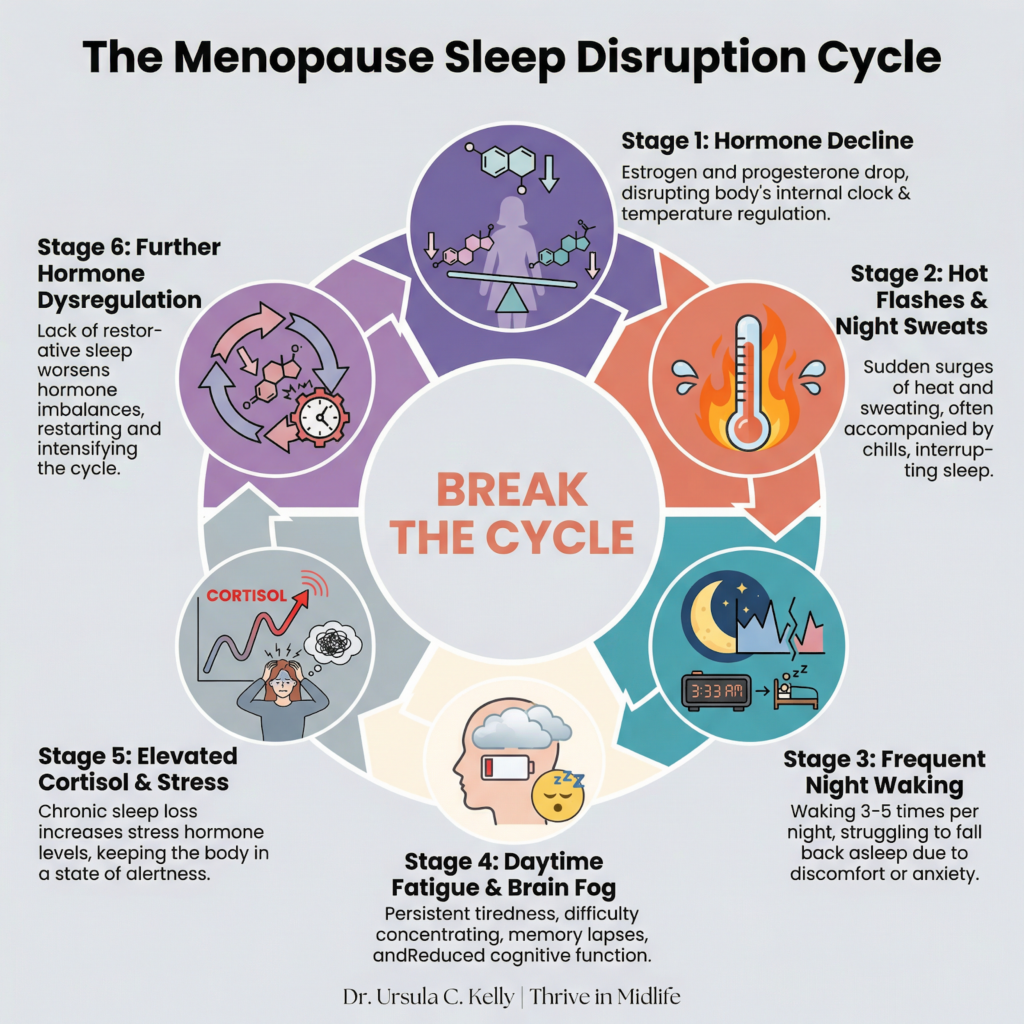
Before we dive into the best sleep supplements for menopause, it’s crucial to understand why this is happening to you. It’s not in your head, and it’s not a personal failing. The sleep disruption you’re experiencing is a direct result of the profound hormonal shifts happening in your body. The two main players — estrogen and progesterone — are taking a nosedive, and they have a massive impact on your sleep architecture.
“Sleep disturbances are a core symptom of menopause. Nutritional interventions may alleviate menopause-related sleep disturbances, as studies have shown that certain interventions can improve relevant aspects of sleep.” [2]
Progesterone is your body’s natural calming agent; it has a sedative-like effect that helps you fall asleep and stay asleep. As its levels decline during perimenopause, you lose that gentle push into slumber. Estrogen plays a vital role in regulating your body temperature and supporting the neurotransmitters that control sleep. When estrogen drops, your internal thermostat goes haywire, leading to the infamous hot flashes and night sweats that can jolt you awake multiple times a night [3].
Understanding the best sleep supplements menopause can be a game changer in your journey towards better sleep quality during this transitional phase of life.
This hormonal chaos creates a vicious cycle: poor sleep leads to higher levels of the stress hormone cortisol, which further disrupts your hormones and your sleep. Research has shown that cortisol dysregulation is directly associated with increased hot flash frequency and severity, creating a self-perpetuating loop of disrupted sleep during menopause [4]. It’s a frustrating cycle that can leave you feeling powerless. But you’re not. Understanding the root cause is the first step to finding effective solutions to help you sleep.
The Ultimate Guide to the Best Sleep Supplements for Menopause
Navigating the supplement aisle can be overwhelming. To make it easier, we’ve broken down the most effective, evidence-based supplements for menopause sleep issues. We’ll cover what they are, how they work, the recommended dosage, and the scientific evidence behind them. Remember, it’s always essential to talk to your healthcare provider before starting any new supplement regimen, especially if you have underlying health conditions or are taking other medications.
1. Magnesium: The Master Mineral for Menopause Sleep
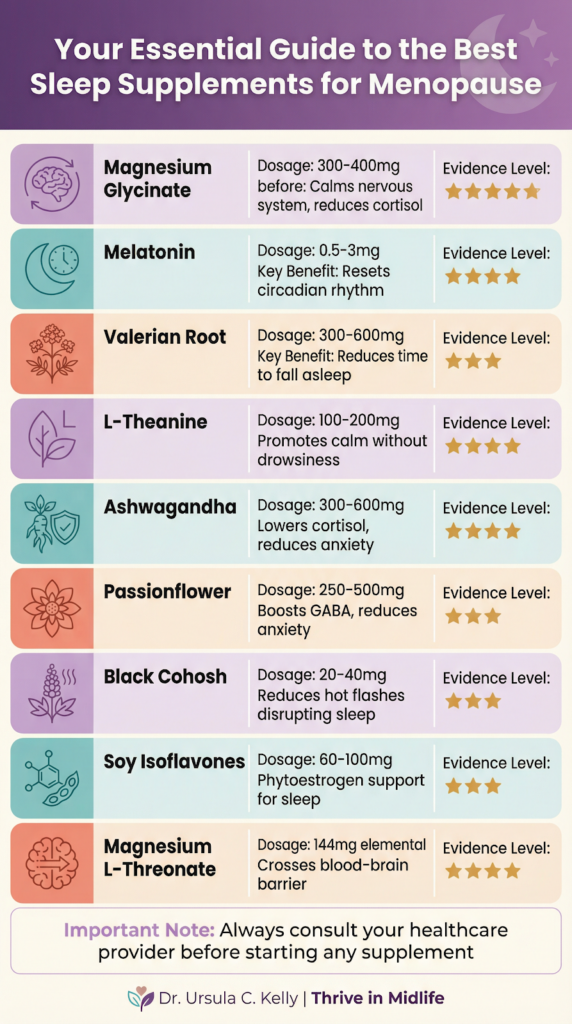
If there’s one supplement to start with, it’s magnesium. This essential mineral is involved in over 300 biochemical reactions in your body, including those that regulate sleep and stress. Many women are deficient in magnesium, and the physiological demands of menopause can deplete your levels even further. Magnesium helps to calm the nervous system, relax muscles, and lower cortisol levels — all of which are crucial for achieving a restful nights sleep [5].
How it Works: Magnesium binds to GABA (gamma-aminobutyric acid) receptors in the brain. GABA is the primary inhibitory neurotransmitter, meaning it helps to quiet down nerve activity, promoting a sense of calm and relaxation that makes falling asleep — and staying asleep — so much easier [6].
Which Form is Best? Not all magnesium is created equal. For sleep, Magnesium Glycinate is the gold standard. It’s highly bioavailable and gentle on the stomach. Magnesium L-Threonate is another excellent option as it has the unique ability to cross the blood-brain barrier, potentially offering additional cognitive benefits alongside improved sleep during menopause [7].
Dosage: 300–400mg of elemental magnesium taken 30–60 minutes before bed. Start at the lower end and increase gradually.
2. Melatonin: Resetting Your Internal Clock
Melatonin is your body’s primary sleep hormone, produced by the pineal gland in response to darkness. It governs your circadian rhythm — the 24-hour internal clock that tells your body when to sleep and when to wake. As we age, and particularly during menopause, melatonin production can decline, throwing your sleep-wake cycle out of alignment [8].
How it Works: Supplementing with melatonin can help to reset your circadian rhythm, making it easier to fall asleep at a consistent time. It’s particularly effective for women who struggle with sleep onset insomnia — the frustrating inability to fall asleep even when you’re exhausted.
Dosage: Less is more with melatonin. Start with a very low dose, around 0.5mg to 1mg, taken 30 minutes before bed. Higher doses can sometimes cause grogginess the next day. A 2026 systematic review found that melatonin-containing supplements may also be associated with improved bone mineral density in menopausal women, offering a potential secondary benefit [9].
3. Valerian Root: The Ancient Sleep Remedy with Modern Science
Valerian root is a traditional herbal remedy that has been used for centuries to treat insomnia and anxiety. It’s one of the most well-researched herbal supplements for menopause sleep, with several clinical trials supporting its effectiveness specifically in perimenopausal and postmenopausal women.
How it Works: Like magnesium, valerian is thought to increase GABA levels in the brain, promoting relaxation and reducing the time it takes to fall asleep. A landmark 2011 randomized placebo-controlled clinical trial found that valerian significantly improved sleep quality in postmenopausal women with insomnia, with 30% of the valerian group reporting improved sleep quality compared to just 4% in the placebo group [10].
Dosage: 300–600mg of a standardized extract taken 30–60 minutes before bed. Valerian is often combined with lemon balm for enhanced effect — one study found this combination improved sleep quality in 36% of menopausal women with insomnia [2].
4. L-Theanine: Calm Without the Drowsiness
L-Theanine is an amino acid found primarily in green tea. It’s unique in that it promotes a state of calm, focused relaxation without causing drowsiness. This makes it an excellent option if anxiety and racing thoughts are the primary solutions to help you sleep that you need most.
How it Works: L-Theanine increases the production of alpha brain waves, which are associated with a state of ‘wakeful relaxation.’ It also boosts levels of calming neurotransmitters like GABA, serotonin, and dopamine, helping to quiet the mental chatter that so often keeps menopausal women awake [11].
Dosage: 100–200mg taken about an hour before bed.
5. Ashwagandha: Taming the Cortisol Beast
Ashwagandha is an adaptogenic herb, meaning it helps your body adapt to and manage stress. It’s particularly effective at lowering elevated cortisol levels, which are a common culprit in the early morning awakenings that plague so many women experiencing sleep disruption during menopause.
How it Works: Ashwagandha helps to regulate the HPA (hypothalamic-pituitary-adrenal) axis — your body’s central stress response system. By lowering cortisol, it can help you stay asleep longer and wake up feeling genuinely refreshed. A double-blind, randomized, placebo-controlled study found that ashwagandha root extract significantly improved sleep quality and reduced anxiety in adults with insomnia [12].
Dosage: 300–600mg of a standardized extract (look for KSM-66 or Sensoril on the label) taken in the evening.
6. Passionflower: Your Gentle Ally Against Anxiety-Driven Insomnia
Passionflower is a gentle herbal remedy that can be incredibly helpful for menopause-related sleep issues, especially when anxiety is a major factor. It’s often combined with other calming herbs like valerian and lemon balm to create a powerful, synergistic sleep formula.
How it Works: Passionflower is believed to work by increasing levels of GABA in the brain, which helps to reduce anxiety and promote a sense of calm. It’s a wonderful option for women whose minds simply won’t switch off at bedtime [13].
Dosage: 250–500mg in capsule or tincture form, taken before bed.
7. Black Cohosh: Targeting the Hot Flashes That Steal Your Sleep
If hot flashes and night sweats are the primary reason you’re waking up, black cohosh might be one of the best sleep supplements for menopause for you. It’s one of the most extensively studied herbal remedies for managing vasomotor symptoms, and it has a solid evidence base for improving sleep quality by addressing the root cause of the disruption.
How it Works: The exact mechanism isn’t fully understood, but black cohosh is thought to have a mild estrogenic effect, helping to stabilise body temperature and reduce the frequency and severity of hot flashes. A 2015 randomised, double-blind, placebo-controlled trial found that black cohosh significantly improved objective sleep quality in postmenopausal women, reducing wake time after sleep onset and increasing sleep efficiency [14].
Dosage: 20–40mg of a standardised extract twice a day.
8. Soy Isoflavones: Phytoestrogen Support for Restful Nights
Soy isoflavones are plant-based compounds that can mimic the effects of estrogen in the body. For women who are looking for natural solutions to help you sleep through gentle hormonal support, incorporating soy isoflavones can be a meaningful part of your protocol.
How it Works: By binding to estrogen receptors, soy isoflavones can help to buffer the effects of declining estrogen levels, potentially reducing hot flashes and improving sleep quality. The 2023 systematic review by Polasek et al. identified isoflavones as among the most promising nutritional interventions for menopause-related sleep disturbances, with multiple studies reporting improvements in insomnia severity and sleep quality scores [2].
Dosage: 60–100mg of isoflavones per day, either from supplements or from whole soy foods like tofu, tempeh, and edamame.
9. Cognitive Behavioural Therapy for Insomnia (CBT-I): The Non-Supplement Solution That Changes Everything
While not a supplement, CBT-I deserves a place on this list because it is considered the gold-standard, first-line treatment for chronic insomnia and is highly effective for sleep during menopause. It’s a structured programme that helps you identify and replace the thoughts and behaviours that are causing or worsening your sleep problems — and its effects are long-lasting, unlike many sleep aids.
How it Works: CBT-I involves techniques like sleep restriction, stimulus control, and cognitive restructuring to retrain your brain and body for better sleep. A 2024 systematic review found that CBT-I significantly improves sleep quality and reduces insomnia severity in menopausal women, and its benefits persist long after the programme ends [15].
Where to Find It: You can work with a trained therapist or use one of the many effective digital CBT-I programmes available online. Consider it a powerful complement to the best sleep supplements for menopause.
Building Your Personal Sleep Protocol: Solutions to Help You Sleep Tonight
Now that you have this comprehensive list of the best sleep supplements for menopause, how do you put it all together? The key is to start low and go slow. Don’t try everything at once. Pick one or two supplements that seem to address your most pressing issues, give them 4–6 weeks to work, and then reassess.
Match Your Symptoms to Your Supplements
Use this guide to identify your starting point:
| Primary Symptom | Recommended Supplements | Why It Works |
| Can’t fall asleep | Magnesium Glycinate + Low-dose Melatonin | Calms nervous system, resets circadian rhythm |
| Wake up frequently | Magnesium Glycinate + Ashwagandha | Reduces cortisol, extends deep sleep |
| Anxiety & racing thoughts | L-Theanine + Passionflower | Boosts GABA, quiets mental chatter |
| Hot flashes disrupting sleep | Black Cohosh + Soy Isoflavones | Phytoestrogen support, temperature regulation |
| All of the above | Magnesium Glycinate + L-Theanine + Valerian/Lemon Balm | Comprehensive multi-pathway approach |
Your 7-Night Sleep Reset Plan
In addition to your chosen supplements, these behavioural strategies will dramatically amplify your results. Think of them as the foundation upon which your supplements can work their magic.
Night 1: Optimise your sleep environment — cool room (16–18°C), blackout curtains, white noise if needed.
Night 2: Adjust your eating window — finish dinner at least 3 hours before bed to allow digestion.
Night 3: Begin your chosen supplement protocol — start with Magnesium Glycinate 30 minutes before bed.
Night 4: Establish a consistent sleep and wake time — even on weekends. Your circadian rhythm depends on it.
Night 5: Reduce caffeine after 2pm and eliminate alcohol — both fragment sleep architecture.
Night 6: Add gentle evening movement — 20 minutes of yoga or stretching to lower cortisol.
Night 7: Create a wind-down routine — no screens for 60 minutes before bed, dim lights, calming herbal tea.

What to Avoid: Common Mistakes That Sabotage Your Sleep During Menopause
Knowing what to take is only half the battle. Understanding what to avoid is equally important when you’re looking for solutions to help you sleep through the night.
Starting too many supplements at once: You won’t know what’s working. Introduce one new supplement every 2 weeks.
Expecting overnight results: Most supplements take 2–4 weeks of consistent use to show their full effect. Be patient.
Ignoring sleep hygiene: Supplements can’t compensate for scrolling your phone in bed at midnight. The behavioural foundations matter.
Taking melatonin in high doses: More is not better. High doses of melatonin can actually disrupt your circadian rhythm rather than support it.
Skipping the doctor: If your sleep disruption during menopause is severe, please speak to your healthcare provider. There may be underlying conditions like sleep apnoea that need to be addressed.
When Supplements for Menopause Aren’t Enough: Knowing When to Seek Help
While the best sleep supplements for menopause can be genuinely transformative, it’s important to recognise when you need more support. Please speak to your doctor if you experience any of the following:
- You’re sleeping fewer than 5 hours per night consistently.
- You wake up gasping or your partner reports that you stop breathing during sleep (this may indicate sleep apnoea, which is more common in postmenopausal women).
- Your sleep disruption is accompanied by severe depression or anxiety.
- You’ve been struggling with insomnia for more than 3 months with no improvement.
- You’re considering hormone replacement therapy (HRT) — this is a valid and effective option for many women and deserves a proper conversation with your doctor.
You deserve proper support. Seeking help is not a sign of weakness; it’s a sign of wisdom.
Conclusion: Your Restful Nights Sleep Is Within Reach
We know how challenging and isolating it can be to struggle with sleep during menopause. It can feel like your body has betrayed you, like the vibrant, energetic woman you used to be has been replaced by someone who can barely function before noon. But we want you to hear this clearly: you are not broken, and you are not alone.
A restful nights sleep is not a distant memory; it’s a biological right that you can reclaim. With the right knowledge and the right tools — including the best sleep supplements for menopause — you can create a personalised protocol that works for your unique body and your unique symptoms. The science is on your side. The solutions to help you sleep exist. You just need to find the right combination for you.
This journey is about more than just sleep; it’s about reclaiming your energy, your clarity, and your vitality. It’s about showing up in the world as the vibrant, powerful woman you are — in this extraordinary next chapter of your life.
Ready to take the next step? Join thousands of women who are transforming their sleep and their lives with our 90-Day Transformational Course. Or take your first step today with our FREE 5-Day Menopause Brain Reset Course — designed to give you immediate, actionable strategies to start sleeping better tonight. You deserve to feel rested, restored, and ready to thrive.
Want to Go Deeper? Trusted Resources to Support Your Sleep Journey
1. National Institute on Aging (NIH) — Sleep Problems and Menopause: What Can I Do?
https://www.nia.nih.gov/health/menopause/sleep-problems-and-menopause-what-can-i-do
2. Johns Hopkins Medicine — How Does Menopause Affect My Sleep?
https://www.hopkinsmedicine.org/health/wellness-and-prevention/how-does-menopause-affect-my-sleep
3. Mayo Clinic Press — Can’t Sleep? How Menopause Can Contribute to Sleep Problems
https://mcpress.mayoclinic.org/menopause/cant-sleep-how-menopause-can-contribute-to-sleep-problems/
4. PubMed Central / Nutrition Reviews — Nutritional Interventions in Treating Menopause-Related Sleep Disturbances: A Systematic Review
https://pmc.ncbi.nlm.nih.gov/articles/PMC11233886/
5. PubMed Central / Life (Basel) — The Effectiveness of Cognitive Behavioural Therapy on Insomnia Severity Among Menopausal Women: A Scoping Review
https://pmc.ncbi.nlm.nih.gov/articles/PMC11595697/
References
[1] “Sleep Disorders and Menopause,” PMC – National Institutes of Health. [Online]. Available: https://pmc.ncbi.nlm.nih.gov/articles/PMC6718648/
[2] D. Polasek, N. Santhi, P. Alfonso-Miller, I. H. Walshe, C. F. Haskell-Ramsay, and G. J. Elder, “Nutritional interventions in treating menopause-related sleep disturbances: a systematic review,” Nutrition Reviews, vol. 82, no. 8, pp. 1087–1110, Sep. 2023. doi: 10.1093/nutrit/nuad113
[3] “The role of ovarian hormones in the pathophysiology of perimenopausal sleep disturbance: A systematic review,” Sleep Medicine Reviews, 2022. [Online]. Available: https://www.sciencedirect.com/science/article/pii/S108707922200123X
[4] “Cortisol dysregulation is associated with daily diary-reported hot flashes among midlife women,” Clinical Endocrinology, 2017. doi: 10.1111/cen.13076
[5] “12-week Magnesium Supplementation on Peri-menopause Symptoms,” ClinicalTrials.gov, NCT07235878. [Online]. Available: https://clinicaltrials.gov/study/NCT07235878
[6] D. KIEFER, “Dietary and Herbal Supplements for Sleep,” in Integrative Sleep Medicine, Oxford University Press, 2021.
[7] “Sleep Problems and Menopause: What Can I Do?,” National Institute on Aging. [Online]. Available: https://www.nia.nih.gov/health/menopause/sleep-problems-and-menopause-what-can-i-do
[8] “How Does Menopause Affect My Sleep?,” Johns Hopkins Medicine. [Online]. Available: https://www.hopkinsmedicine.org/health/wellness-and-prevention/how-does-menopause-affect-my-sleep
[9] J. I. Du et al., “A systematic review and meta-analysis of randomized controlled trials on melatonin supplementation and bone mineral density in menopausal women,” Frontiers in Nutrition, 2026. doi: 10.3389/fnut.2026.1687221
[10] S. Taavoni, N. Ekbatani, and H. Haghani, “Effect of valerian on sleep quality in postmenopausal women: a randomized placebo-controlled clinical trial,” Menopause, vol. 18, no. 9, pp. 951–955, Sep. 2011.
[11] S. Baba, “Effects of L-Theanine on Cognitive Function in Middle-Aged and Older Subjects: A Randomized, Placebo-Controlled, Double-Blind Study,” Journal of Medicinal Food, vol. 24, no. 4, pp. 333–341, Apr. 2021.
[12] D. Langade, S. Kanchi, J. Salve, K. Debnath, and D. Ambegaokar, “Efficacy and Safety of Ashwagandha (Withania somnifera) Root Extract in Insomnia and Anxiety: A Double-blind, Randomized, Placebo-controlled Study,” Cureus, vol. 11, no. 9, Sep. 2019.
[13] “6 Natural Remedies for Menopause Sleep Problems,” The Better Menopause. [Online]. Available: https://thebettermenopause.com/blogs/the-better-gut-community/herbal-remedies-menopause-sleep-problems-insomnia
[14] K. Jiang, H. Jin, Y. Li, Y. Yao, and S. Li, “Black cohosh improves objective sleep quality in postmenopausal women: a randomized, double-blind, placebo-controlled study,” Menopause, vol. 22, no. 5, pp. 505–511, May 2015.
[15] A. Ntikoudi et al., “The Effectiveness of Cognitive Behavioral Therapy on Insomnia in Menopausal Women: A Systematic Review,” PMC, 2024. [Online]. Available: https://pmc.ncbi.nlm.nih.gov/articles/PMC11595697/