

Table of Contents
Have you ever walked into a room and completely forgotten why you’re there? Or found yourself staring blankly at your computer screen, struggling to recall a word that’s right on the tip of your tongue? If you’re nodding your head, please know you aren’t alone. This isn’t a sign that you’re losing your mind, and it certainly isn’t a personal failing. It’s a very real, physiological shift happening in your body, and it’s incredibly common during the menopause transition.
When we talk about menopause, we often focus on hot flashes and night sweats. But for many women, the cognitive changes—that frustrating “brain fog”—are the most alarming symptoms of all. The good news? You have far more control over your cognitive function than you might think. By understanding the connection between your hormones and your brain, and by strategically choosing the right foods for menopause brain health, you can protect your mind, clear the fog, and reclaim your sharp, focused self through incorporating foods for menopause brain health into your diet. This guide will focus on the specific foods for menopause brain health that can make a difference.
In this guide, we’re going to explore the science behind these changes and, more importantly, the actionable dietary strategies for brain health that can make a profound difference in how you feel every single day. We’ll look at how specific foods for menopause brain health can support your cognitive function, stabilize your mood, and protect your long-term cognitive health.
Understanding the Estrogen-Brain Connection
To understand why your brain feels different right now, we need to look at what’s happening beneath the surface. Your brain is an incredibly energy-hungry organ, consuming about 20% of your body’s total energy supply [1]. And for decades, estrogen has been the master regulator of that energy.
Estrogen acts like a key that unlocks your brain’s ability to efficiently use glucose, its primary fuel source. When estrogen levels begin to fluctuate and decline during perimenopause and menopause, your brain essentially experiences an energy crisis [2]. It’s like trying to run a high-performance sports car on low-grade fuel. This metabolic shift is a primary driver behind the brain fog, forgetfulness, and difficulty concentrating that so many women experience.
Furthermore, this isn’t just a temporary inconvenience. Research shows that women’s brains undergo visible metabolic changes during menopause, which may help explain why women are at a higher risk for Alzheimer’s disease compared to men [3]. But please don’t let that frighten you. Instead, let it empower you. Because while we can’t stop the hormonal transition, we can absolutely change how we fuel our brains. This is where the foods for menopause brain health become your most powerful tool. By choosing the right foods for menopause brain health, you can provide your brain with alternative energy sources and protective nutrients.
The Power of the MIND Diet
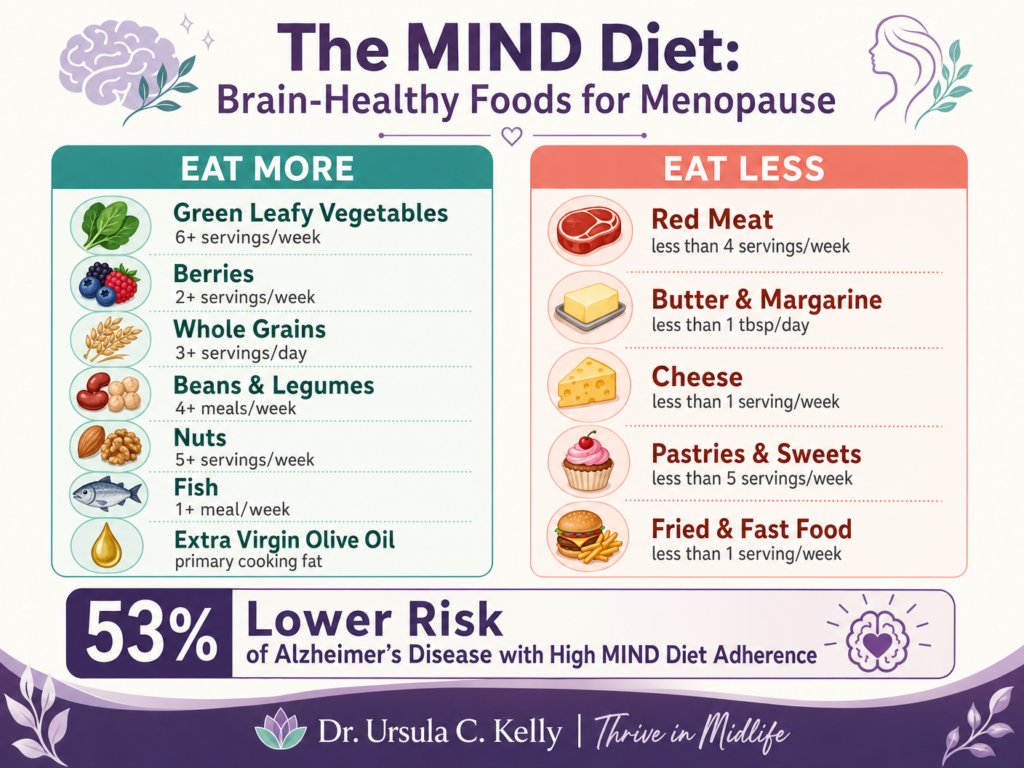
When it comes to dietary strategies for brain health, one approach stands head and shoulders above the rest: the MIND diet. MIND stands for Mediterranean-DASH Diet Intervention for Neurodegenerative Delay. It was developed by researchers at Rush University Medical Center and the Harvard Chan School of Public Health specifically to protect the aging brain [4].
The MIND diet takes the best components of the Mediterranean diet and the DASH (Dietary Approaches to Stop Hypertension) diet and focuses specifically on the foods that have been scientifically proven to support cognitive function. And the results are nothing short of remarkable.
Try Our New Tool
Studies have shown that participants who closely followed the MIND diet had a 53% lower rate of Alzheimer’s disease [4]. Even those who only moderately followed the diet saw a 35% reduction in risk. Perhaps most encouragingly, participants with the highest MIND diet scores had a significantly slower rate of cognitive decline, effectively keeping their brains younger for longer [5].
This isn’t about restrictive dieting or counting every calorie. It’s about abundance—filling your plate with nutrient-dense foods for menopause brain health that provide the exact building blocks your brain needs to thrive during this transition. When you focus on adding these foods for menopause brain health, you naturally crowd out the foods that don’t serve you.
Essential Brain-Boosting Foods
So, what exactly should you be eating? The MIND diet emphasizes several key food groups that are particularly beneficial for menopausal women. These are the core foods for menopause brain health that you should aim to include regularly.
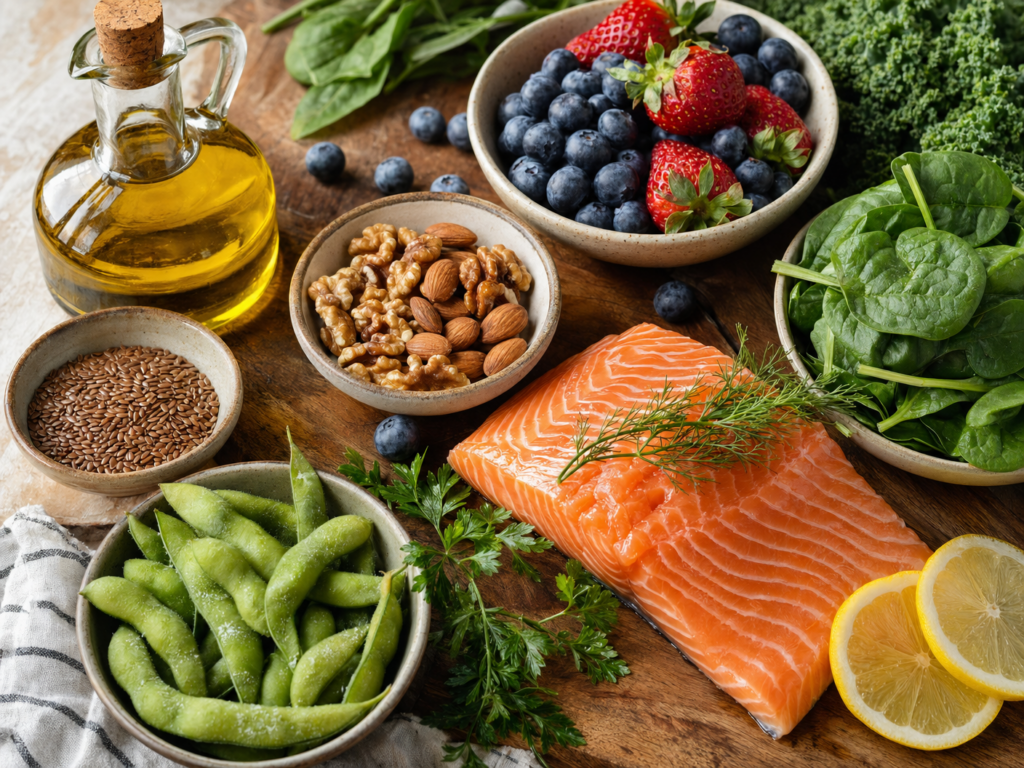








First, prioritize green leafy vegetables. Spinach, kale, Swiss chard, and collard greens are packed with folate, vitamin E, carotenoids, and flavonoids. These nutrients are powerful antioxidants that protect your brain cells from oxidative stress and inflammation [6]. Aim for at least six servings a week. These leafy greens are foundational foods for menopause brain health.
Second, make berries your go-to sweet treat. Blueberries and strawberries, in particular, are rich in anthocyanins, compounds that have been shown to improve memory and delay cognitive aging [7]. Try to include berries in your diet at least twice a week. Berries are delicious and potent foods for menopause brain health.
Third, embrace healthy fats, specifically extra virgin olive oil and nuts. Extra virgin olive oil should be your primary cooking oil, as its polyphenols help lower inflammation and support memory [8]. Nuts, especially walnuts, provide excellent healthy fats and vitamin E. These healthy fats are essential foods for menopause brain health.
Foods to Limit for Cognitive Clarity
Just as important as what you include is what you choose to limit. To protect your cognitive function, the MIND diet recommends minimizing foods that drive inflammation and oxidative stress. While focusing on foods for menopause brain health, you should also be mindful of what to avoid.
This means cutting back on red meat, butter and stick margarine, cheese, pastries and sweets, and fried or fast food. These foods are typically high in saturated and trans fats, which can impair the blood-brain barrier and contribute to cognitive decline [9]. You don’t have to eliminate them entirely, but treating them as occasional indulgences rather than daily staples will significantly benefit your brain health. Prioritizing foods for menopause brain health means making room for what nourishes you.
Navigating Menopause Symptoms: The MIND Diet Connection
The benefits of these dietary shifts extend far beyond long-term cognitive protection. They can also provide immediate relief for some of the most challenging day-to-day symptoms you’re facing. When we look at menopause symptoms the mind diet offers a comprehensive approach to feeling better right now. By incorporating foods for menopause brain health, you can address multiple symptoms simultaneously.
Stabilizing Energy and Focus
One of the most immediate benefits of adopting the MIND diet is the stabilization of your blood sugar. By focusing on whole grains, beans, and vegetables, and limiting refined sugars and pastries, you prevent the dramatic spikes and crashes in blood glucose that exacerbate brain fog and fatigue. These complex carbohydrates are important foods for menopause brain health.
When your blood sugar is stable, your brain has a steady, reliable supply of energy. This translates to better focus, improved concentration, and a significant reduction in that mid-afternoon slump. You’re essentially providing your brain with the premium fuel it needs to compensate for the decline in estrogen. Choosing the right foods for menopause brain health keeps your energy levels consistent.
Reducing Inflammation
Many menopausal symptoms, including joint pain and cognitive fuzziness, are driven by systemic inflammation. The foods prioritized in the MIND diet—particularly extra virgin olive oil, leafy greens, and berries—are potent anti-inflammatories [10]. By reducing inflammation throughout your body, you create a more hospitable environment for your brain to function optimally. Anti-inflammatory foods are crucial foods for menopause brain health.
Menopause Mood Changes and Diet
We can’t talk about brain health without addressing emotional well-being. The hormonal fluctuations of menopause don’t just affect your memory; they profoundly impact your mood. Naturally lower levels of progesterone are linked to lower levels of GABA, a calming neurotransmitter in the brain, which can lead to increased anxiety and irritability [11].
When it comes to managing menopause mood changes and diet, the connection is undeniable. Your gut and your brain are in constant communication via the gut-brain axis. What you eat directly influences the production of neurotransmitters like serotonin and dopamine, which regulate your mood [12]. The foods for menopause brain health that support cognition also support emotional balance.
The Role of Omega-3 Fatty Acids
If there’s one nutrient you should prioritize for mood support, it’s omega-3 fatty acids. Found abundantly in fatty fish like salmon, mackerel, and sardines, omega-3s are critical for brain health. These are some of the most powerful foods for menopause brain health available.
Research has shown that omega-3 polyunsaturated fatty acids can significantly improve emotion and cognition during the menopausal transition [13]. They help reduce inflammation in the brain and support the structural integrity of brain cells. The MIND diet recommends eating fish at least once a week, but if you’re struggling with mood swings or depression, you might consider increasing that or speaking with your healthcare provider about a high-quality omega-3 supplement. Fatty fish are essential foods for menopause brain health.
Phytoestrogens for Hormonal Balance
Another powerful dietary tool for managing mood and cognitive symptoms is the inclusion of phytoestrogens. These are plant-based compounds found in foods like flaxseeds, soy, and legumes that can weakly mimic the effects of estrogen in the body [14]. These phytoestrogen-rich options are valuable foods for menopause brain health.
While they aren’t a replacement for your body’s natural estrogen or hormone replacement therapy, incorporating phytoestrogen-rich foods can help smooth out the hormonal rollercoaster, providing a gentle stabilizing effect on both your mood and your cognitive function. Including these foods for menopause brain health can make a noticeable difference in how you feel.
Investing in Long-Term Cognitive Health
The choices you make today aren’t just about clearing today’s brain fog; they are an investment in your long-term cognitive health. The transition through menopause is a critical window of opportunity. It’s a time when your brain is vulnerable, but it’s also a time when it is highly responsive to positive interventions. Focusing on foods for menopause brain health is a proactive step toward a healthier future.
By prioritizing foods for menopause brain health, you are actively building cognitive reserve. You are giving your brain the nutrients it needs to repair itself, to forge new neural pathways, and to remain resilient in the face of aging. Every time you choose foods for menopause brain health, you are investing in your future self.
Remember, you are not broken, and this cognitive fuzziness is not your permanent new normal. It’s simply a signal from your body that it needs a different kind of support right now. By embracing the principles of the MIND diet, focusing on nutrient-dense, anti-inflammatory foods, and treating yourself with the compassion you deserve, you can navigate this transition with clarity, confidence, and a sharp, vibrant mind. The right foods for menopause brain health can be your greatest allies.
Conclusion: Your Next Steps to a Sharper Mind
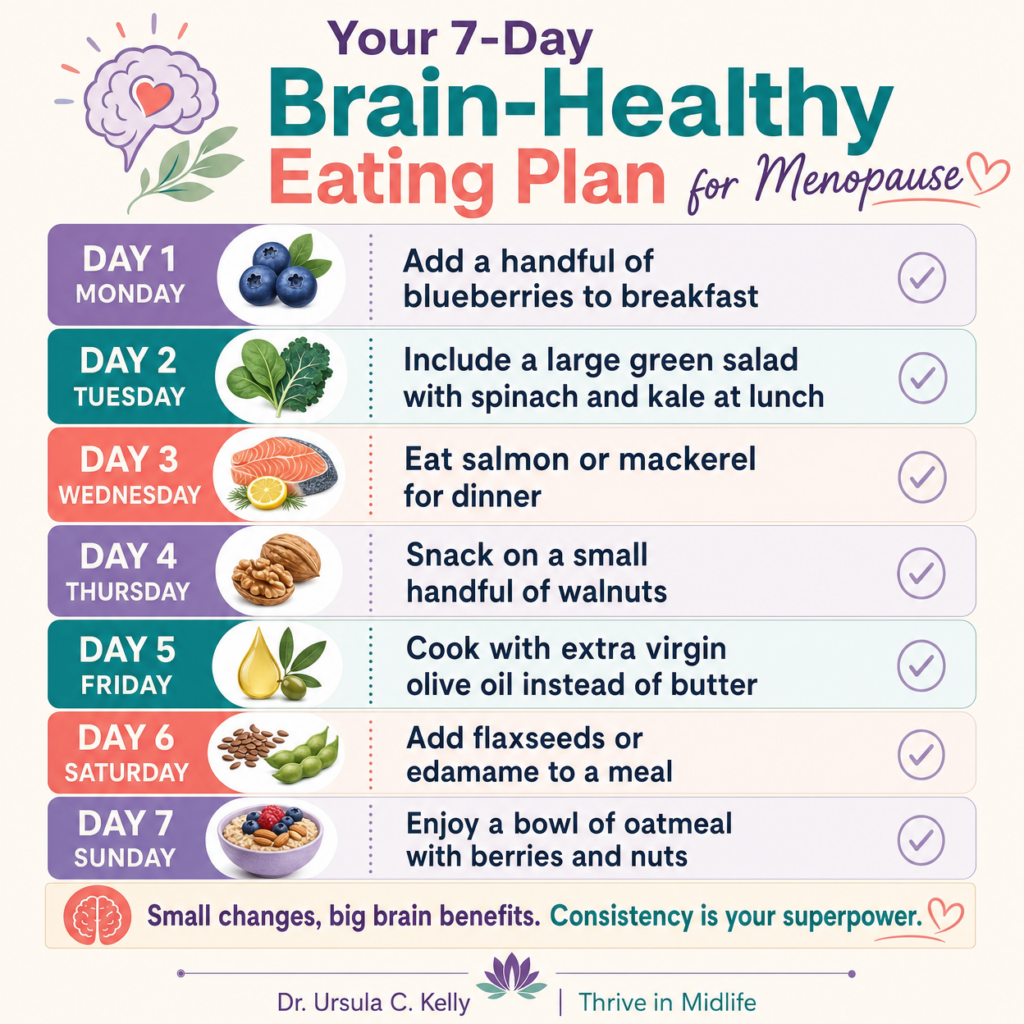
Navigating the cognitive changes of menopause can feel overwhelming, but I want you to leave here feeling empowered. You have the tools to support your brain, and it starts with your very next meal. You don’t have to change everything overnight. Start small. Add an extra serving of leafy greens to your dinner. Swap your afternoon cookie for a handful of berries and walnuts. Choose salmon instead of steak once this week. These simple swaps incorporate more foods for menopause brain health into your daily routine.
Every positive choice is a step toward better focus, improved mood, and long-term cognitive resilience. If you’re ready to dive deeper and truly transform your experience of menopause, I invite you to explore my books, “The Menopause Brain Reset” and “Intermittent Fasting for Women Over 50 Made Simple.” They are packed with the science-backed protocols and practical strategies you need to thrive.
And if you’re looking for immediate, actionable support, join our FREE 5-Day Menopause Brain Reset Course. You’ll get daily guidance, delicious recipes, and the community support you need to clear the fog and reclaim your brilliant mind. You deserve to feel sharp, focused, and fully yourself. Let’s take that first step together by focusing on the best foods for menopause brain health.
Further Reading: Trusted Sources to Help You Take the Next Step
- Diet Review: MIND Diet — Harvard T.H. Chan School of Public Health
https://nutritionsource.hsph.harvard.edu/healthy-weight/diet-reviews/mind-diet/ - Healthful Diet Linked to Reduced Risk of Cognitive Decline — National Institutes of Health (NIH )
https://www.nih.gov/news-events/nih-research-matters/healthful-diet-linked-reduced-risk-cognitive-decline - Mental Health and Menopause — The Menopause Society
https://menopause.org/patient-education/menopause-topics/mental-health - Can Alzheimer’s Be Prevented? — Alzheimer’s Association
https://www.alz.org/alzheimers-dementia/research_progress/prevention - What Is Menopause? — National Institute on Aging (NIA )
https://www.nia.nih.gov/health/menopause/what-menopause
How to fix brain fog?
Consult a healthcare professional for proper diagnosis and treatment. Prioritize sleep, hydrate, maintain a balanced diet, exercise regularly, manage stress, and limit distractions.
What supplements are good for menopause brain fog?
Omega-3 fatty acids, vitamin D, B vitamins (especially B6 and B12), magnesium, ginkgo biloba, and phytoestrogens (such as soy isoflavones).
Do I see an endocrinologist for menopause?
Yes, you can see an endocrinologist for menopause.
What brain food is good for menopause?
Leafy greens, fatty fish, nuts, seeds, berries, whole grains, and dark chocolate.
References
[1]How Much Energy Does the Brain Use?
[3]Women Twice as Likely to Develop Alzheimer’s Disease as Men
[4]MIND Diet Associated with Reduced Incidence of Alzheimer’s Disease
[6]Healthful Diet Linked to Reduced Risk of Cognitive Decline
[7]Anthocyanins and Human Health — A Focus on Oxidative Stress, Inflammation and Disease
[8]Protective Effects and Benefits of Olive Oil and Its Extracts on Women’s Health
[9]Dietary Patterns and Alzheimer’s Disease: An Updated Review Linking Nutrition to Neuroscience
[10]Nutrition and Cognitive Health: A Life Course Approach
[11]Menopause Mood Changes & Foods to Help with Mood Swings
[12]Diet and Depression During Peri- and Post-Menopause: A Scoping Review
[13]n-3 PUFA Improve Emotion and Cognition during Menopause: A Systematic Review
[14]The Role of Diet in Managing Menopausal Symptoms: A Narrative Review